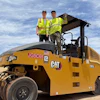

Jake Hoefert started swinging a shovel on a seal coat crew at 15 years old. Three years into running his own company, EcoSurface landed on the Pavement Maintenance & Reconstruction Top Contractor list.
The path between those two points did not run in a straight line. Hoefert left asphalt at 21, spent time in finance in New York City and then in software sales, and came back to the industry with a set of tools most paving contractors never get exposed to. In this Contractor Snapshot interview he breaks down what he brought back with him, why he believes growth creates more problems than it solves, and how a Phoenix-based contractor keeps crews in an Arizona market where labor jumps between companies every few weeks.
CONNECT
EcoSurface: https://www.ecosurfaceusa.com/
Jake Hoefert on LinkedIn: https://www.linkedin.com/in/jacobhoefert/
1. To start, how did your career in the asphalt industry begin, and what attracted you to this line of work?
ANSWER: I got my start in the asphalt industry when I was 15 years old, working for my best friend's father. Like most people in the business, I started at the bottom. [I] started off as a laborer swinging a shovel, cleaning equipment, helping out with seal coat, brooming, all that good stuff. I wasn't really thinking about owning a company someday or getting to where I am now, but just trying to learn as much and absorb as much as I could and earn a paycheck as young and naive 15 year old kid. What hooked me was the pace and the sense of accomplishment. I always like driving past a project years later and say that I helped build that. There's something special about creating something tangible that you know thousands of people rely on every day. Over time, I worked my way through nearly every role in the business. I started off as a labor, moved over to a foreman, project manager, estimator, salesperson, and now a business owner. You know, I actually left the industry for a while. I worked in asphalt from age 15 to about 21 when I graduated college. Then I went and spent some time working in finance in New York City, and then later in software sales. I was still helping manage projects, selling work, and really staying connected to the business. Looking back, that experience really gave me a unique perspective. I learned how world-class companies operate, how to build systems, how to scale sales organizations, and really how software and technology can help transform business. I brought those lessons back to the industry that I generally love, and that's kind of where I'm at now. When I was living in New York City, Regional Pavement was working out of Rochester, New York. I would fly up on the weekends sometimes and help them out and pave and continue always having an arm in the business, so it's just something that I'm passionate about.
2. Can you please tell me more about EcoSurface (originally Regional Pavement Maintenance) as a company and what type of work or services it focuses on? What was the original vision when you launched?
ANSWER: I think when starting a company, you have a vision, but it changes the third, second, or second, third, fourth year. When we launched the company, the vision wasn't to become the biggest contractor in the industry, but just to build the kind of company that customers wanted to work with and employees wanted to be a part of. We started with a focus on the pavement maintenance services – everything from taking smaller jobs, asphalt patching, concrete curbing, seal coating, to where we are today. Now we're working on large-scale mill paves, RNRs, pretty much everything underneath that pavement maintenance realm. As our customer relationships grew, so did the opportunities. We realized that customers wanted a partner who could handle everything from the routine maintenance to major asphalt and concrete project projects, and that's really what led to the evolution of EcoSurface today. So, again, today we're self-performing asphalt and concrete services throughout the southwest, seal coating, cracked ceiling, striping, asphalt repair, replacement, concrete flat work, and just large scale construction projects. What really separates us isn't necessarily what we do, but how we do it. We really focus heavily on communication with customers, responsiveness, technology and that overall customer experience. We want customers to feel like they're working with a modern construction company, not just another contractor.
3. Before co-founding EcoSurface, what were some of the most important lessons you learned from working in the field? Did you always plan to start a company?
ANSWER: The field teaches you lessons you can't learn in the classroom. I respect and understand what our guys are doing daily, because it’s what I've done in the past. When you spent years loading sealcoat takes in 110 degree Arizona weather, or working long nights to finish a project, you really gain appreciation for what it takes to execute. That's something I carry with me every day as a business owner. Another lesson is that pavement and the asphalt industry is ultimately a people business. Customers buy asphalt and concrete, and it's just dirt, oil, and rock at the end of the day. But what they're really buying is that trust aspect. They're trusting you to show up, communicate, solve problems for them, and then deliver on what a promise. As far as starting a company, I always had an entrepreneurial mindset. I’ve always loved building things, whether it was projects, teams, customer relationships, or businesses. And after spending time in that finance and sales space, I started realizing there's a huge opportunity to bring that different mindset into the pavement industry. A lot of contractors are excellent builders, but they can’t all combine that operational excellence with technology, branding, and customer experience. That's really what became that foundation for EcoSurface.
4. After taking the leap to found EcoSurface, what did those early days look like? What did you learn that you still apply today?
ANSWER: I wore every single hat and still do to an extent. I think the early days were controlled chaos. I was getting new accounts, selling projects, managing projects, answering customer calls, complaints, operating machinery when I had to, reviewing finances, dealing with collections and helping ultimately to solve the field issues. There were long days involved, for sure, and there were times when it felt like every problem essentially ended up on my desk. But at the end of the day, I'm a problem solver. That's what I really love to do, and the last few years have taught me two important things: first that growth covers up problems temporarily, but systems solve them permanently. Secondly, culture really matters more than strategy. You can have the best business plan in the world, but without the right people around you, it doesn't really matter. Even today, I still try to stay connected to the field. I'm out on just about every single project we have, and again, if I have to hop on the paver or a loader or skid steer just to help out the guys, I'm more than happy to do so. I think the further leaders get away from those day-to-day operations, even though sometimes you have to, the harder it becomes to make those educated decisions for your company.
5. What’s been the biggest challenge your company has faced recently — whether economic, workforce-related, or logistical — and how did you overcome it?
ANSWER: I'd say managing growth. We've exploded over the last few years, and most people think that growth solves problems and makes you more money. But really it just creates more problems. As we've expanded geographically and taken on larger customers, we've really had to make sure our infrastructure and process and systems and crews grow with us. It’s important to invest in people before you think you need them, being more proactive instead of reactive, investing in technology before you think you need it, and then really building those systems before they become urgent. We've laid a pretty good foundation with that, but there's always room for improvement. As customers continue to trust us with larger projects and expanding the scope of work they've given us, we’ve had to make sure our people, process, and systems were growing at the same pace to meet our customer demands. We've been super fortunate. A lot of our growth has come organically through relationships and repeat customers. When you perform well and work well with customers, they’re more likely to trust you with another property, another market, or even a larger project. That trust just really I'd say compounds over time. Growth is exciting, but sustainable growth is really what we're focused on at this point. I love what I do every day. I’m super passionate about it.
QUESTION FOLLOWUP: With most of the growth coming organically, are there any other marketing efforts you’ve used that were also effective?
ANSWER PART 2: Well, when we were all sitting in a room together and discussing a name and logo, I think every great brand has a story behind it. The reason behind the name “EcoSurface” is first that “eco” makes you think of eco-friendly products or of economical decisions. Asphalt is also the most recycled material on the planet, so there's the eco component to it too. Then you have “surface”, and a surface can really be anything. We look at surfaces, concrete, asphalt, whatever it may be, it's kind of a universal word in the industry. I think marketing and branding there with the name on its own is huge – it's essentially the paver with the asphalt roadway, the sub base underneath, concrete, etc. I think my experience in software sales and estimating for the previous asphalt company also helps, but I think that it's changed a lot over time. And with that software sales role, it's a very similar sale to an asphalt sale, but it gave me a different perspective on how to go out and prospect and build client relationships, and I think ultimately all you need is a shot, and then once you have that shot, it's really matters what you do with it there, so I think that if you can prove yourself and deliver those quality results that customers expect, it just continues to compound over time.
6. In the past year, what company accomplishment or milestone are you most proud of?
ANSWER: Yeah, a couple things come to mind. Being recognized as one of the Pavement Maintenance & Reconstruction Top 40 pavement contractors this year, and then I think it was top 50 last year… That's a huge milestone for us, not because of the ranking itself, but really because of what your team is built with that, and what it represents. I think back to being that 15 year old kid at times, and working on projects, and covered in sealer. And if you told me one day we'd build a company recognized nationally within the first three to four years, I probably wouldn't have believed you. But I think what really makes me most proud, though, is the team and the people who helped us get here, so throughout my career, I've been fortunate to have just incredible mentors, partners, and industry veterans who are really willing to share their knowledge and help me avoid mistakes that many entrepreneurs and young entrepreneurs make, I'll say, but their guidance has accelerated my growth and continues to daily as a leader and as a business owner, I think one thing I've learned is that success is never really an individual accomplishment. Awards like this are result of the great employees, great partners, and great customers and great mentors are pulling in the same direction. So I'm incredibly grateful for people who believed in me and put that trust in me to help shape both my career and EcoSurface. Yeah, and I think just again, just how fast we've, we've grown, and being able to, you know, some of the customers we work with, and some of the large logos, and things like that, that's just a huge accomplishment. And I think the sky's the limit of where we can take this and what we can do, but I'm just really proud of the team and everyone involved.
NOTE: EcoSurface has about 20-30 employees seasonally (10-20 on the job crews, 9 in-office)
7. What is on the horizon? What do you hope the future of the company looks like / what goals do you have for the next 5-10 years?
ANSWER: I'm always wanting to improve, I'm always wanting to grow sustainably, like I mentioned earlier, but ultimately, I think we're still just, just getting started, and I think over the next, I'd say five to 10 years, our goal is to become one of the premier self-performing pavement and concrete contractors in the country. We want to continue expanding into new markets, growing our account presidents and relationships. And then I think the big one is continuing to invest in our people, and then equipment - buying equipment is always fun, right? So I think what really excites me the most, though, is as we continue on this journey and growing, making sure that our employees are valued and felt heard, and building those future leaders within the organization. I couldn't do it without any of my folks involved, and there's times they keep me at bay, I may not know an answer, but then they have the answer, so it's a nice.. I'd say, what's the word I'm looking for.. a nice fusion.. I don't know if that's the right word, but sounds good to me. Yeah, and I really think the real measure of success isn't really how large EcoSurface becomes, it's whether we can create opportunities really for our employees and build something that lasts well beyond any one individual, so if I were to stop tomorrow, how can the company continue to operate and all that stuff? I think that's that's really important to me, and ensuring that everyone has the same values and goals aligned to what we're trying to get to.
8. As labor retention remains an issue industry-wide, how do you build a team culture that attracts, trains and retains quality employees? How do you approach training and retaining your crew members?
ANSWER: For us specifically in Arizona, you see folks losing their labor left and right, and they job hop between each company. It's like, ‘hey, we're not busy this week, we're going to go to the next one, we'll be back in two months’. I think one of the biggest mistakes that a lot of companies make, and we've made this in the past as well, is people leave because of money. I'd say sometimes that's true, but more often people leave because they don't see a future. So, at EcoSurface, we spend a lot of time talking about growth and opportunity, and you know, maybe you bring in a 21 year old kid to come run a seal coat crew, and he doesn't want our seal coat crew till he's 30. He wants to hop on a paver and explore new things and get a CDL. So, I think providing those different opportunities for employees is big, and let them know there's different avenues, and I'm kind of proof in the pudding there, where I started off as a laborer, and then worked hard for two to three years doing that, until I could build some trust and learn the estimating side of the house and the project management side of the house. So I always like kind of telling my story and say, "Hey, you got to start somewhere, you can't just jump from something to being the CEO. It takes time and effort and a lot of hard work and concentration, but I just want employees to know that where they start isn't necessarily where they have to finish, right? So, and again, I've lived that personally, started off as labor and then became the company owner or partner, so when people can see that path forward, they're much more invested, and we try to create an environment where people feel respected and heard, and I think construction specifically is demanding enough, and the workplace doesn't need to make it harder. So we do team outings, things like that, all the time, just to keep up the morale. And I know it's getting hot in Arizona, so yeah, we just, we try to do as much as we can with the guys, customer per employee appreciation, and let them know that there's different avenues outside of what they're currently doing.
9. How have advancements in equipment, technology or project management changed the way EcoSurface operates compared to when you first entered the industry?
ANSWER: The difference is night and day. I’m somewhat young in the industry, and having the experience and exposure of working in different organizations has helped me adapt. You’re seeing striping robots and things like that, but I don’t really think the industry is at the point of only-robots yet. Like I said, we're a people industry, and we like care of our people. As far as software is concerned, when I first started estimating, it was all paper Excel. There was no e-signature at the time, or it at least wasn't fully developed, just to get quote signed. I think a lot of decisions were just based on experience and instinct back in the day. I think what's really important is that today’s technology gives us real-time visibility into operations, project progress, customer communication, the equipment utilization, and toll on that, and overall financial performance. So, I think just my experience in the software space, and probably has accelerated our adoption of technology. I enjoy the latest and greatest technology, and I don't believe there's one true system that can do everything right. You got to use “best of breed” approach (using great software that does what it's meant to do, and then combine it all together in one ecosystem). I've just seen firsthand how powerful systems can be when implemented correctly. So, and I just think forward thinking, the contractors that embrace technology won't replace the fundamentals of the business, they'll just simply execute much better and faster. And I'm a huge proponent of software in the industry, and whatever can make our day-to-day easier, and communication is huge too, so I think communicating between the field and the office and the crews and all of those things are super important, and it just ultimately gives that customer that I'd say that overall experience that we're trying to give them.
10. What do you think the future holds for the pavement maintenance industry, particularly for the next generation of contractors?
ANSWER: I'm incredibly optimistic about the future of the industry. Infrastructure isn't going away. Parking lots, roadways, facilities will always need maintenance and repair. What I do think will change though is really the customer expectations. I’ve seen this evolving the past three years or so. Customers ultimately want transparency, they want communication, they want contractors who are going to be able to provide that data, the documentation, and really professional project management. So, the next generation of those contractors will need to be builders, operators, and business leaders all at the same time, and the companies that adapt to those customer needs will ultimately thrive.
11. What’s one piece of advice you would give to a younger version of yourself or someone just starting out in the paving or maintenance business?
ANSWER: Don’t rush the process. When you're young, it's easy to focus on titles, money, or owning a business someday. But what I've learned is that every stage of my journey has taught me something valuable. I would say back to my younger self to just learn everything that you can and ask questions, which I still do to this day. I don't know everything, and I think that's one of my strong suits -- being able to ask questions and not second guessing. Spend time in the field, understand operations, understand sales, understand finance, understand the whole umbrella of the business, and not just siloed in one avenue. I think the more pieces of the puzzle that you understand, the more successful that you're going to be later on. Also, remember that your reputation is your greatest asset. In this industry, people just remember who shows up, who's going to follow through and do what they say they're going to do, and that's ultimately it. Don’t rush, and build a strong reputation.
12. Is there anything else you would like to share about your journey, your team, or in general that you may like to see featured in the article?
ANSWER: There isn't one path to success in this industry or career. My journey took me from asphalt to banking to software, and eventually back into asphalt, and that's because I do believe that where I'm at now is that I love doing what I do every single day. I really do. And at times a lot of those experiences felt disconnected, and looking back I think they all played a role in preparing me to build EcoSurface. I also want to acknowledge that I didn't do it alone, and again, I've been fortunate enough to work alongside mentors, partners, and leaders throughout my career, and a lot of them have decades and decades of experience, if not a lifetime, on me. And thank you to all of them for willing to invest their time, knowledge, and guidance, and they continue to do that. Their lessons have really helped me avoid costly mistakes and really just give me confidence during some of the most challenging moments of building out EcoSurface. The pavement industry is unique in a way that it's competitive, but it's also filled with people who generally want to see others succeed if they're willing to work hard and learn. Asphalt gave me my first start. It really taught me work ethic, accountability, resilience, and now leadership. Today, with where we're at, our mission is simple: just build a company that delivers exceptional results for our customers, create opportunities for employees, and ultimately raise the standard for what people expect from a pavement contractor. If we've accomplished anything at EcoSurface, it's because we've had great people around us every step of the way.