
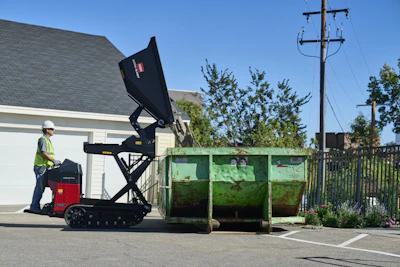
Rental fleets looking to diversify need look no further than battery-powered equipment. Battery-powered compact utility loaders (CULs) and material buggies are an excellent addition to a rental house’s portfolio, and shine even brighter when paired together to help customers work more efficiently.
This dynamic duo can also open the door to productivity on unique jobsites that require smaller, quieter machines that don’t produce engine exhaust. By renting electric equipment, contractors can transform a costly fixed capital expense into a project-specific variable cost, allowing them to bid on higher-value projects without investing fully in the total operating cost of the new equipment.
The rapid evolution of battery-powered compact equipment is a direct response to contractors demanding zero-engine emission power that doesn’t sacrifice performance. By moving from traditional lead-acid batteries to high-density lithium-ion systems, the industry has delivered machines with instantaneous torque and all-day runtimes. Furthermore, many of these machines are designed with narrow footprints, down to 31.5 inches, to easily navigate through standard doorways, freight elevators and tight hallways where traditional equipment simply cannot fit.
Consider these three unique jobsites and real-world examples where electric equipment shines.
Adaptive Reuse
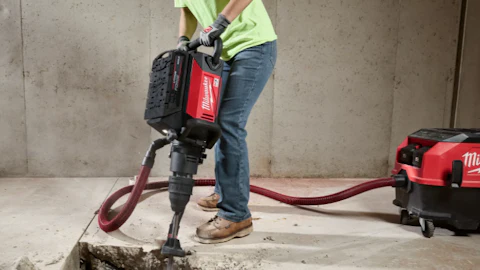
Reimagining underutilized, historic and industrial buildings into apartments, breweries or retail spaces is an accelerating trend as developers find it is far cheaper to renovate an existing structure than to build new. Interior contractors have historically been forced to rely on sledgehammers and wheelbarrows because traditional combustion-powered equipment was either too bulky to enter the building or required expensive, high-volume ventilation setups to manage engine exhaust.
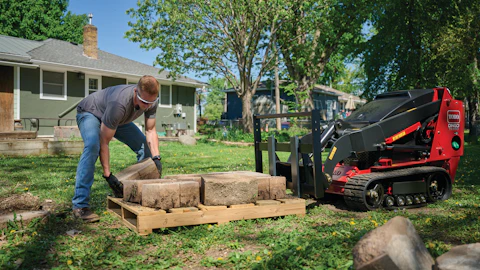
This was the case for a recent 50,000 sq. ft. state office building renovation in the Midwest where compact, battery-powered equipment provided a solution. Crews were initially pulling up carpet tiles with pliers, a task that would have taken several workers four days to complete. By utilizing a battery-powered CUL with a floor scraper attachment, a single operator finished half the floor in just one hour. The crew also replaced manual push-carts with a battery-powered material buggy to move large volumes of debris through standard doorways, reducing the risk of lifting injuries.
 The Toro Company
Sensitive & Occupied Spaces
Project managers working to maintain or renovate hospitals, schools, churches or shopping malls face a unique set of constraints that battery-powered equipment can help overcome. Contractors need to work quietly and maintain air quality in the work space so as not to disrupt the essential services still happening in other parts of the building. Before battery-powered and compact options, manual labor was the only solution.
During a large-scale renovation of a church education center, a contractor removed 20,000 sq. ft. of ceilings and flooring while the facility remained open to the public. Using an electric CUL, armed with grapple bucket and floor scraper attachments, and an electric material buggy, the crew achieved a 55 percent increase in production over manual labor. The efficiency saved them approximately two weeks on the project timeline.
Golf Course Renovation
Golf courses are another jobsite that may require battery-powered machines’ quiet operation. While courses have maintenance crews for daily upkeep, they often hire specialized contractors for larger projects, like bunker renovations, tee box leveling, cart path installation or large-scale earth moving, which require heavier machinery. If these projects cannot happen during the off-season, the courses work to ensure the project is a minimal distraction to the golfer's game.
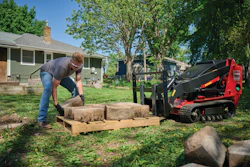
A battery-powered, wide-tracked CUL tackled a patio removal project while the golf course remained fully operational. Because the machines operated quietly, the crew was virtually invisible to guests, who continued their game just yards away without any disruption to their experience. The machine’s wide track allowed the crews to use more powerful equipment without disturbing the well-manicured grass around the course.
 The Toro Company
Rental ROI
For rental businesses, adding battery-powered CULs and material buggies to the fleet is a strategic decision for the bottom line. Not only do they open the door to new jobsites for rental customers, they offer reduced maintenance requirements, lowering total cost of ownership.
By marketing these machines as a pair, rental operations can drive higher utilization. Contractors who rent a CUL for demolition will naturally need the buggy to transport the resulting debris. Incorporating battery-operated equipment can help rental houses transform from an equipment provider to a logistical partner, helping contractors avoid time-consuming manual labor and win high-value bids on unique jobsites.