
Imagine if you showed up to work each day in a uniform that didn’t fit. You had to wear equipment that was too large and needed incessant adjustment at the most inconvenient of times. Imagine it presented a very real risk of being caught by the machinery you worked with, resulting in an additional very real risk of amputation. You wear a respirator that passed the fit test one time but now leaves gaps that have you inhaling harmful substances. You are expected to go about your work, hiding these challenges and not calling attention to the extra burden you face while trying to do good work. As your body naturally changes, you must keep wearing the same equipment so no comments are made about you. Trying to work, trying to live, yet at the same time trying to blend in.
A Long-Recognized Problem
This problem has always existed. This is how many women in the workplace have always felt. However, it became far more public in March of 2019 when the first all-female spacewalk was scheduled to take place. It was scrapped a couple of days prior because there were not enough spacesuits in the sizes needed by the female astronauts. This situation, far more complex than has been relayed here, is representative of issues women in the workforce have faced since the dawn of personal protective equipment (PPE). The National Safety Council’s Director of Networks. Abby Ferri, CSP, ARM, who at the time led the American Society of Safety Professionals’ Women in Safety Excellence Common Interest Group, relayed in a contemporaneous article that she knows women who have to use duct tape on the tops of their gloves or the bottoms of their coveralls to make them fit. Additional coverage documented how short women with large hip-to-waist ratios are often given male 2XXL coveralls as the only somewhat-fitting option. These are just two examples published after realizing this was the time to force a change.
This challenge may have been news to the public, but it was already known throughout the industry. Reports from the OSHA Advisory Committee for Construction Safety and Health (ACCSH) in 1995 and the American Society of Safety Professionals in 2019 highlighted PPE as an issue that significantly affected working women. Coupled with a growing female workforce in “nontraditional roles,” it was time for something to significantly shift.
Building a Standard
In March 2020, days before the global shutdown would change the world forever, a group of nine women and one man met to begin constructing ANSI/ASSP TR-590.6-2023 Technical Report: Guidance of Personal Protective Equipment for Women. This group sought to use evidence that ill-fitting PPE harms workers, coupled with anthropometric data and discussion on the psychological impacts, in a report that could be the catalyst for change. It was a tangible first step – and one that brought about monumental change.
The most important portion of this standard is Section 5.4, Impacts of PPE Fit. This section reviews physical impacts, additional physical considerations, psychological hazards and efficiency. It truly recognizes the challenges faced by the over 80 million women in the workplace, who make up 47.6% of our workforce.
OSHA 1926.95(c)(2) states that PPE shall properly fit each affected employee. Yet, it is evident that the breadth and long-lasting nature of this problem mean that organizations are failing to meet the standard for working women. Despite there being a need and a consumer, the product, even though it exists on the market, is not available for use in the workplace.
The Hazards of Improper Protection
The physical impacts of PPE on women are the most visually obvious. Women outpace men in fatal injury events in categories of exposure to harmful substances and environments. These include electricity, radiation, noise, temperature extremes, air and water pressure changes, oxygen deficiency, traumatic stressful events and harmful substances as identified by ANSI/ASSP TR-590.6-23.
To provide one specific example, the 2023 American Community Survey showed that 75.3% of healthcare practitioners and technical operations and 84.2% of healthcare support operations are made up of female employees. During the COVID-19 pandemic, healthcare workers were required to wear respiratory protection in nearly every instance while at work. Women experienced severe facial bruising and lacerations due to masks that often were not their usual or proper size. In addition, when a mask does not fit as intended, it cannot adequately serve as the necessary last line of defense from harmful airborne pathogens and substances. While it may have passed a one-off fit test on an annual basis, any ongoing adjustment to support comfort and normal movement during use could reduce protection because it was not designed for female wearers to begin with.
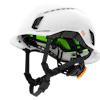
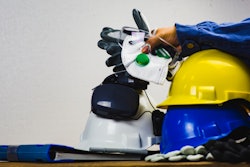
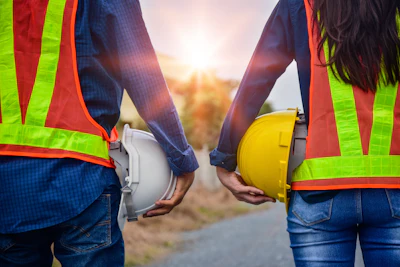
That last point underscores the physical impacts of PPE for Women. They often have hard hats that fail to sit correctly or protect the correct area of the head due to fit; safety glasses that allow gaps, negating their protection; and body protection that is too large and could result in caught-in, amputation and struck-by injuries. Women face increased risk – often while wearing the protective equipment intended to be the last line of defense for their personal safety. The historical approach of “shrink it and pink it” may be an initially “cheap” or “easy” approach an employer could take, but it’s unacceptable – ultimately failing to safeguard employees, reduce risk or even meet legal compliance.
It’s also important to note that women may need multiple sizes and styles of PPE to support natural life-cycle events, which have an outsized effect on women in the workplace. Pregnancy, mastectomy, hysterectomy, and menopause can all lead to meaningful physical alterations to a woman’s measurements, weight and distribution of composition. ISO 45010 Menstruation, Menstrual Health, and Menopause in the Workplace is a guidance document in the process of being published globally that aims to raise awareness of and support for these specific issues, which have a real effect on PPE.
Beyond the Physical Impact
Beyond physical impacts, women face psychological hazards as a result of their PPE, too. Women have historically accepted wearing ill-fitting PPE, increasing their risk of harm, simply because it was the least-worst option available. They did not want to bring attention to their unique needs, receive distasteful remarks or be perceived as receiving preferential treatment. Women are hiding or suppressing their biological differences and the psychological realities that result, simply because they don’t want to risk being perceived as unable to do the job they were hired and paid to do.
This ultimately hits on the final impact of PPE for women: efficiency. In a workplace where PPE needs to be modified, continually adjusted, or is simply not functioning as intended, it not only fails to provide protection but also reduces efficiency. Large gloves slow jobs that require fine motor skills. Misaligned vibration protection elements on gloves may necessitate more frequent breaks during the task. Adjusting uniforms, hard hats, glasses and respirators takes time and focus away from the task at hand. While the previous three reasons are far more important, efficiency matters to organizations and may be the catalyst needed for change in some instances.
Creating Safer, Better-Fitting Solutions
Women, like their male counterparts, show up to work each day to complete the task at hand, be efficient members of their organizations, and contribute to the achievement of safety, quality and production. Lack of appropriate gear and fear of othering or retaliation are standing in the way. Let’s take the steps necessary to ensure all our colleagues have the PPE and psychological safety to achieve the collective goal of safe, efficient worksites.