
Most concrete contractors already have PPE on the job. Hard hats, safety glasses, gloves, respirators, and first aid kits aren’t new to anyone in this industry.
The question isn’t whether crews have safety gear. The better question is: Does that gear conform to the most current performance standard? That’s where things can get confusing.
A product may be “compliant,” but that doesn’t always mean it reflects the latest version of a safety standard. In some cases, OSHA rules still point to older versions of ANSI/ISEA standards, even though newer versions are already being used in the field.
That gap can create problems when contractors are buying PPE, writing job specs, working with suppliers, or trying to make sure everyone on a project is following the same expectations.
Why “Compliant” Is Not Always Clear
PPE performance standards are updated over time, about every five years. Standards change because of equipment innovation, testing improvements, and advancements in understanding how injuries happen and how to prevent them.
But OSHA doesn’t always update its regulations right away. So you can end up with two different things being true at the same time: A product may meet an older standard still referenced in OSHA regs, and another product may meet a newer standard that better reflects current testing and jobsite conditions.
Both may be “compliant,” but they may not offer the same level of information, testing, or protection.
That’s why contractors should ask one more question: Does my PPE conform to the latest standard?
 A type 1 helmet. An update to the standard is expected to be published in 2026, addressing issues such as chin straps, helmet retention, and enhanced impact protection.International Safety Equipment Association
Head Protection
Head protection is a good example of why the version of a standard matters. OSHA still references ANSI/ISEA Z89.1 head protection standards from 1997, 2003, and 2009. But head protection has evolved substantially over the last 30 years. More recent versions of the standard include improvements related to side-impact performance, reverse donning, higher-temperature testing, and compatibility with other PPE commonly used on the job.
One important thing to understand is the difference between Type I and Type II head protection. Type I hard hats are mainly tested for impacts to the top of the head. Type II helmets are tested for impacts from more directions, including the front, back, and sides.
That matters because not every head injury comes from something falling straight down. Workers can bump into equipment, strike fixed objects, or take a hit from the side while moving around the jobsite, or during a fall
The practical takeaway: when buying or specifying head protection, don’t stop at “hard hat” or “safety helmet.” Ask which version of the standard it meets and whether it provides the level of protection needed for the work being done today.
Eye & Face Protection
Safety glasses are another area where the version matters.
Mmake sure supervisors and crews know how to read standard markings.
OSHA still references older versions of ANSI/ISEA Z87.1 for eye and face protection. The current standard, ANSI/ISEA Z87.1-2025, uses markings that give greater detail about what the eyewear is designed to protect against.
Those markings can show whether the eyewear is rated for impact, dust, splash, or chemical exposure.
That’s useful because not all safety glasses are built for the same hazards.
A pair that may be fine for general work may not be the right choice for cutting, grinding, drilling, mixing, or cleanup. When the task changes, the eye protection may need to change with it.
The practical takeaway: make sure supervisors and crews know how to read standard markings. If workers can’t tell what their eyewear is rated for, they’re left guessing.
First Aid Kits
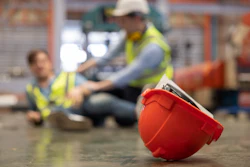
 A first-aid station at the office is great. Make sure to bring a kit to every jobsite. International Safety Equipment Association
OSHA guidance still points to ANSI Z308.1-1998. The current version, ANSI/ISEA Z308.1-2021, gives up-to-date guidance on what should be in workplace first aid kits, including sanitation items, supplies to help control bleeding, emergency blankets, and other items that may be needed on today’s jobsites.
An even newer version is expected later this year and will add guidance for mobile workers, the use of naloxone in the workplace, and a requirement that first aid kit guides be provided in both English and Spanish.
For contractors working across multiple jobsites, moving crews, or remote areas, these differences matter.
A small kit may be enough for some jobs. But it may not be enough for larger sites, remote pours, moving crews, or higher-risk work.
Ask basic questions:
- Is the kit easy to find?
- Is it stocked?
- Does it match the type of injuries that could happen on this job?
- Do crews know where it is?
- Is someone checking it regularly?
The practical takeaway: don’t assume any first aid kit is good enough just because one is on-site.
Why This is Being Raised Now
ISEA and other national safety organizations have asked OSHA to update its references to reflect current PPE standards. Editor's Note: This column was written in the summer of 2026.
This isn’t about creating extra work for OSHA or contractors. It’s about clearing up confusion.
Many companies are already using PPE that conforms to newer standards. Most suppliers sell products tested to newer standards. Updating OSHA’s references would help contractors, suppliers, owners, and crews get on the same page.
That matters when you’re writing specs, ordering PPE, reviewing bids, or checking equipment before work starts.
Five Things Contractors Can Do Now
You don’t have to wait for OSHA to update anything. There are a few simple steps contractors can take now.
1. Ask for the Standard & the Version
Don’t settle for “ANSI compliant.” Ask:
- Which ANSI standard?
- Which version?
- Where is that shown on the product or paperwork?
That one extra question can prevent a lot of confusion.
2. Be Specific in Purchase Orders, Specs & Rules
If you want PPE that conforms to a certain standard, say so clearly.
Instead of writing “ANSI-compliant safety glasses” in an order or SOP, include the specific standard and version.
3. Match the PPE to the task
Don’t assume one piece of PPE fits every job.
Look at the actual task. Then look at the hazard. Then check whether the product is rated for that hazard.
That’s especially important when crews move between tasks like cutting, grinding, drilling, pouring, demo, and cleanup.
4. Get Everyone on the Same Page Early
If a project requires PPE that conforms to a newer standard, make that clear before crews show up.
Don’t wait until mobilization to find out that the owner, general contractor, subcontractor, and supplier all had different ideas of what “compliant” meant.
5. Teach Crews What the Markings Mean
PPE markings shouldn’t be a mystery. A short toolbox talk can help workers understand what to look for with head protection, safety glasses, and other gear.
The goal is simple: workers should know whether the PPE in their hands matches the hazard in front of them. ISEA offers many free educational resources at safetyequipment.org.
Bottom Line
“Compliant” isn’t always specific enough. Contractors should know which standard applies, which version is being used, and whether the PPE matches the actual work being done.
That doesn’t have to be complicated. It starts with asking better questions.
That’s how contractors can cut through the confusion and make better PPE decisions in the field.