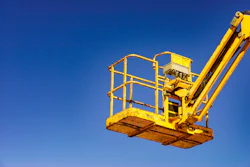

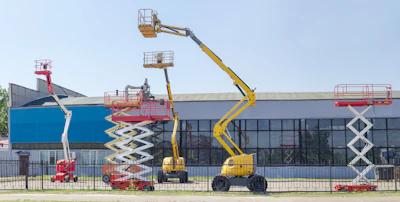
The mobile elevating work platform (MEWP) continues to be one of the more popular categories of equipment rented. While they remain also one of the safer methods for working at height, safety has been and will continue to be key to their operation and training.
Inferior or non-compliant training of MEWP equipment can be a detriment to both the operator as well as rental operation. The International Power Access Federation (IPAF) with Sunbelt conducted a presentation offering some definition to the requirements and parameters of what constitutes compliant training. Here are some of the takeaways.
According to section 1926.55(b)(2)(ii), OHSA standards require that only authorized persons shall operate on aerial lift. However, Tony Groat, IPAF’s North America Regional Manager, considers this limited when it comes to the scope of training, “I would be struggling to say what is the content of that training and what is it that you're trying to provide.”
Industry standards through ANSI offer a bit more guidance with MEWPs covered within A92.22 and A92.24. Among others, these refer to the application, inspection, training, maintenance, repair, and safe operation portion of the training requirements. According to Groat, the most significant happenings was in 2018 when the ANSI standards were developed. Beforehand, trainings were based on individual products.
But these instructions can only so far. Where any training only enables a person to become qualified — it doesn’t make one qualified. By definition, explains Groat, a qualified person has “successfully demonstrated their ability to solve or resolve problems.” This means more than an operator who knows how to go up/down and drive it around but capable of inspecting the equipment, understanding how to match the machine to application, as well as recognizing the hazards associated on-site.
“There’s much more in there than just saying ‘get on that machine and let me show you the controls’,” notes Groat.
Furthermore, training does not necessarily transfer from one category of equipment to another. Groat likens it to renting a car. While someone may have a license, they may not be familiar with the new machine. In other words, scissor lift training doesn’t transfer to a boom lift or other powered lifting equipment.
Some of the items covered in the authorized training include how to perform daily per-start inspection as well as how to conduct daily inspection of the workplace for hazard awareness/identification.
Like everything within the rental shop or on the job, communication is key. One of the new requirements since their release in 2018 is providing occupant instructions from the operator. In short, it’s information for those that may also be working on or near the equipment so that can safely work within the environment — this also includes being compliant with industry standards, manufacturer recommendations and site requirements.
“All of those elements are part of this knowledge base that an operator needs to have,” says Groat. “That comes through this training, being aware of all these particular elements and having the skills and proficiency to implement those when they’re out on the jobsite.”
IPAF encourages a continued education with any new assets since any training session won’t be able to cover the safe operation of every machine available on the market. Nor will any single training ever be able to cover any/all future assets that have yet to be designed and manufactured. Reviewing the operator’s manual is the best first step to capture the specific knowledge on that specific machine.
That material combined with qualified instruction of an in-depth curriculum by a qualified trainer, theory, and practical application is all part of the training standard. This includes everything including the familiarization and inspection of all functions, controls, workplace, and more.
“It’s not just what’s being used for that task, they’ve got to be able to demonstrate competency on all the controls, lower and upper, and including the parking and shutdown,” says James Redin, Sunbelt Rentals – National Safety Training Manager.
Ultimately, the goal for instructors is to have the necessary factors in place within a curriculum so they can adequately train at home: being able to safely set up an operating area, especially in equipment rental areas where forklifts may be around, trucks coming and going, pedestrian traffic walking around, etc.
The standard recommends operators should be able to demonstrate competence in both theory through classroom (or online) and practical through documentation. While these forms aren’t mandatory, they’re there for reference and continued proficiency.
That situation is going to be the most controlled environment that the operator will experience with the asset, so trainings should as realistic as possible. Speaking to the trainers, “You need to be as disciplined as possible in showing them all of the most appropriate things…those processes and procedures need to be replicated. They need to be in place each and every time that they’re operating that equipment,” says Groat.
Finally, the certificate of completion. This is the documentation of all the training — who trained them, the date, the categories of equipment, the standards, etc.
IPAF’s goal in defining MEWP operator training is more than just what should be trained, but how to deliver the training.
Reinforcing the definition of training, “Training enables one to become qualified," says Groat. "It doesn’t make them qualified. Part of the requirement within the scope of the standards is the user shall ensure that their personnel are trained, qualified and authorized to these training requirements.”
It’s a big part of it, but, in a way, training is a component that can build on the ability of one to become qualified.