
*This content is sponsored by CMC
In a way, structural stability starts before the ground breaks. The key phases in early stage construction include the planning, the design, the site prep, the ground stabilization.
In this episode of the For Construction Pros Digging Deeper podcast, join Joe Cavanaugh, P.E., vice president and general manager of Geopier, a division of CMC, to discover more about the company and what they can do to ensure construction projects get off the ground on the right foot.
Digging Deeper is a podcast series highlighting various aspects of the construction industry, including the equipment, people, companies and associations making it all happen. CLICK HERE to find more episodes of the Digging Deeper podcast.
Before a building is built, it needs a solid foundation. CMC, a leader in early stage construction, has all the expertise, solutions and products you need to give your projects the best start. With over 100 years of experience, CMC is the right partner to help you deliver builds that stand the test of time. Visit CMC.com to learn more.
Hello and welcome to the Digging Deeper podcast hosted by For Construction Pros covering various aspects of the construction industry, including the equipment, people, companies and associations making it all happen.
Hi. I'm Jonathan, and this episode, sponsored by CMC, features my interview with Joe Cavanaugh, vice president and general manager of Geopier, a division of CMC. One of the key phases in early stage construction is understand the ground you're about to build on — is it stable, how can it be improved, and be open to that ever-powerful question, why. It's here where we start: what ground improvement means, and what the experts within CMC can do to help contractors and the projects they're building, wherever they're building. Here's my interview.
Concrete Contractor: So, Joe, thank you for joining us on Digging Deeper. I'd like to start in the beginning and get to know our guests a little bit more. As vice president and general manager of Geopier, a division of CMC, how did you find yourself in the construction industry?
Joe Cavanaugh: I think for me, it was growing up. I was always sort of interested and intrigued with how stuff was built — bridges and buildings and things that you would see, especially as a young kid looking at it going, "How did they build that and then that?" I suppose even as I got a little older, I was, "why did they do it this way or that way?"
There was a curiosity aspect to it from early on. Then I found myself in engineering school at NC State, got a civil engineering degree and got involved in the construction industry more years ago than I care to remember at this point.
Concrete Contractor: That "why" of anything can be just a Pandora's box of such curiosity and intrigue. There's so many questions that just unpack with why.
Cavanaugh: I would agree. That, to me, is a great question to always ask, especially for the construction and engineering world in general. Engineering, in general, is really unpacking why. I've also learned over time that maybe your initial understandings of why evolve as you get better techniques to understand things, better experimental techniques and better computational capabilities. You can ask that question with a little more nuance to it, and continue to answer that question.
That's one of the things that's also kept me in construction, and in this part of construction is always trying to take things forward. You ask why, you are given an answer and then, then the question is, "what if we do this or do that? What happens then?" That's where it gets interesting.
Concrete Contractor: There's always that chance of "why are you doing this this way? Is there a way we could do it better? Let's, let's have that collaboration. Let's have that communication." Can you talk to me about Geopier?
Cavanaugh: Geopier is a ground stabilization and ground improvement specialist. We are engineers and innovators that develop ground improvement techniques and engineering methodologies. We partner with specialty contractors from around the world that build our technologies and install our technologies on projects all around the world.
You get the best of both worlds with the technology creators in the Geopier company, and the engineering expertise that we have combined with contractors from all over the world, with experiences from all over the world. That, we believe, gives the best solution, the best model, if you will, for delivering ground improvement to construction projects.
Concrete Contractor: I want to know what you mean by ground improvement. How are we improving the ground but I think you'll be able to answer me that through talking to me about the design, the planning, the site prep and the ground stabilization, the ground improvement that we're that I'm asking the why about. What is Geopier's role in this stage of construction? Where does Geopier fit in ground improvement?
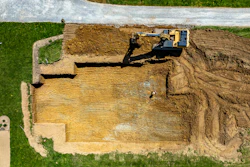
Cavanaugh: We're really involved in all of the phases of that earliest stage construction activity: the initial site development, when ground is being broken for the first time, and they're trying to get the site ready to construct whatever it is that's ultimately intended to be built. In many cases, I would say in increasing cases nowadays, quality sites being fewer and fewer as more things are being built on site conditions that are less than ideal. All the good ones are taken.
What we do is help the engineering teams, the geotechnical engineering teams and the structural engineering teams understand those ground conditions that exist on a given site. The best way to deal with any suboptimal conditions that might exist on that site. Our focus area is less about the surface ground conditions and more about what's going on at depth, 50, 60, 80 feet down.
As structures get bigger, the influence of load gets deeper, and these ground conditions become that much more important. Understanding what's happening well below the surface is a big part of it. Understanding it is a big part, but it's one part. You got to figure out how to deal with it and that's where the ground improvement technologies come into play.
We've got different types of ground improvement technologies and techniques to deal with different types of ground conditions for different types of structural requirements and for different types of buildings that might be getting constructed, buildings or embankments or retaining walls.
Our role is to to help the engineering community have great solutions to deal with those conditions. Not just developing, inventing and creating these things, but also helping the engineering community implement them on whatever project that they're dealing with from a geotechnical or structural. Beyond the engineering part of it is where our partner contractors come into play. There they'll be the ones that come to the site and install the system so that the site is prepared and able to support whatever is ultimately intended to be built.
Concrete Contractor: Now we're that starting to develop on land that's sub optimal leads me to believe that we started construction on optimal land, because that's what you do, you build on optimal land. Are we now starting to develop on sub optimal because we need to, or we can?
Cavanaugh: I would say both. In addition to that, though, there is ever increasing demands and changing demands on our infrastructure. More demanding conditions. More seismicity in certain areas. The design requirements are ever changing as well. I think it's a combination of the good sites being less available, a need to design and build better for a lot of reasons because the requirements — if you will — are constantly increasing and getting more challenging and demanding. But it's also about doing things better more cost effectively.
Schedule improvements. It's not just about dealing with a problem condition or a challenging site, it's about getting a job built with more schedule certainty and less concerns for problems, so that the jobs can be built with a lot of confidence, especially at the earliest of the early stages where you're out there breaking ground. That's where things often will go wrong early. The implications of them going wrong ripple through the job's entire schedule. Making sure that you're handling this part of construction really well, either from a cost efficiency or certainty of what you're doing is a big part of what we're doing.
Concrete Contractor: It's an unforgiving industry. If there is a problem way early, that's going to just ripple along, and that's going to be a tidal wave later in life, because there's no time to actually handle it if there's unforeseen problems. Fine, you deal with the problems as you come. They're going to come. It's going to rain too many times or something like that. But that's that planning ahead of time. That's where you guys are coming in and helping them make sure that the schedule is on the right foot.
Cavanaugh: It's definitely starting with that certainty, having a good solution that's already proven for those conditions, and then, as you say, stuff happens in construction. It's just how it is. You just got to be prepared to deal with that. For all those reasons, that's where dealing with people that are very experienced expert in these areas — especially at this earliest phases of construction — is hugely beneficial.
For a lot reasons, it's a critical phase of overall construction. You always want to get off on your right foot as early as possible. But it's also interesting probably because you're dealing with this underground, that there's a high degree of uncertainty about what's actually below the surface. That's where it's very critical early on, but it's also where there's a higher challenge to understand what you're actually dealing with.
Like I mentioned earlier, helping the engineering teams really understand these sites and the implications of the conditions is a big part of it. That comes from experience on 1,000s and 1,000s of projects all over the world. Taking that experience and not just having it be in our heads. This is experience that we get digitized and leverage digital tools to make sure that we're having that experience be deployed on all of our projects going forward, not just limited to the guy that's been around forever that knows everything about every job. Something that we bake into our business process.
Concrete Contractor: I almost forgot that we are talking about 50-60 feet under the ground. And not just surface level projects. We're talking deep. How do those challenges differ from something more normal versus going 60 feet down or deeper?
Cavanaugh: The biggest difference is you can't see or touch or taste. You can't get that direct knowledge of it. There's lots of techniques to sample soils and understand what's going on below the surface. But, you've got that degree of literal space between you and what you're trying to understand versus if you're looking at a beam that was maybe placed wrong, or a bolt that wasn't put in right, or weld that wasn't quite right. You can see it. You can touch it. There's a higher degree of certainty for it.
The knowledge and experience that comes with the time on these situations is really important. But not just that. It's really taking advantage, again, of the best tools and techniques that are available to us these days, and not just relying on human wisdom always. There was a time where people would taste, not halfway joking, but taste the dirt and say, "oh, that's this," or "that's that."
It's definitely a thing of geotechnical engineers. Certainly feeling and seeing is a big deal, but when you're 50-60, feet down, it's difficult to know versus something that's right in front of you. It's just a different challenge.
Concrete Contractor: What are some myths or some common misunderstandings from contractors that they should understand better about ground stabilization?
Cavanaugh: I think this is a really good question. Ground improvement as an industry and techniques has been around for a little while now — 20, 30 years or so. We have a relatively mature, proven, and pretty good understanding of stuff at this point. It's often looked at as any other trade that they need to sort of buy out on a job and identify a couple bidders, get a couple prices, and whoever's low wins the job.
A myth to me, big time, is that low is best in this industry and the ground improvement for all the reasons we talked about. Breaking that practice of whoever's low wins the job, especially for contractors, general contractors, that are out there thinking about this, listening to this. It's lowest is not always best in in our industry. I would say that would be one myth for sure.
And then the other thing is not all ground improvement techniques and technologies are the same. There are many that are very similar to one another. And then there are others that are different and distinct. And these differences and points of being distinct are often where some unique value exists in the technologies that get you better, capacities that get you better, stiffnesses in what you're putting in the ground so you get better performance, more assurance that you're not going to have problems on the job.
There's a bit of a perception that all these things are the same: therefore, whoever's low, just go with them and you'll be fine. I would just caution with that.
Concrete Contractor: Does Geopier specialize in one type of ground stabilization? You mentioned there was a few different ways to accomplish the same job, and there might be pros and cons in both.
Cavanaugh: It goes back to one of your earlier questions.
We're always creating something better and new. Always striving to deal with challenging conditions in a better way, improving existing ones so that they perform better or can be installed faster, so that we can get on and off jobs faster and compress people schedules. We're always trying to improve. This continuous improvement — continuous innovation — is really part of the DNA of the business.
There's definitely differences, and these differences are intended at creating some value somewhere, for someone, and oftentimes for contractors. We can be competitive price wise. Sometimes we're low. But I would say that our technologies and techniques are intended to get better and better, constantly improving, whereas others are more content with state of the practice and just doing what others are doing than being low.
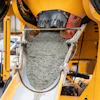
Concrete Contractor: There's a comment I saw on one of Geopiers social media posts that said something what we've been talking about very succinctly. It says, "once you're pouring concrete, it's already late to fix structural mistakes." And that's such a good way of saying things. It reinforces the importance of planning. Before we start placement, before that concrete arrives, what can we be doing better?
Cavanaugh: It's interesting. Our preference would be getting involved in the design phases earlier. That way, we can make sure that the job benefits from having the best technique for the given site and given structure that's trying to be built.
Getting involved earlier in the design phases allows for the highest value to be created for the project, but certainly making sure you're dealing with folks that know what they're doing. That have been around for a while, and can proactively point out potential issues and make sure that there's not surprises when you're in the field trying to build stuff. Let's have those surprises before anybody gets to the site. So folks that can look at plans, understand conflicts, point out conflicts, and work with the design teams to reconcile those conflicts before you're on site with expensive equipment and schedule to meet. It's better to get that stuff resolved on the drawing board, if you will.
I think those are the kind of two distinct things that I would mention.
Concrete Contractor: It says also on the Geopier website that you guys work with contractors, as you've said, to develop a cost efficient design that allows for higher design bearing pressures, greater settlement control and reduced construction schedules. Can you elaborate a little bit more on that walk? Walk me through the process of how Geopier works with contractors.
Cavanaugh: It starts even before working with contractors. It goes back to continuing to develop and improve these technologies, so that what we're building and designing with is constantly improving. By constantly improving our ground improvement systems, we can optimize the designs for how they're used. You can use fewer elements. You can have ones that will resist settlement better. That, again, translates into more certainty about what you're dealing with: less surprises during construction.
I would say again, the better the improving ground improvement technologies, as opposed to just maintaining the status quo translates into more assurance during construction. That you're not going to have problems. That you're dealing with people that know what they're know what they're doing. That you've got a very efficient solution for your job so you can get us and our installer on the site, get the ground improved and get us out of there so that you can move on to your next activities without a lot of questions [like] "Do these guys know what they're doing," or "Have they dealt with this before?" It's this technical capability coupled with construction, tried and true and proven that I think makes a big difference.
Concrete Contractor: As someone with an ear to the ground, I'd like to take the chance here to ask about the geotechnical side of things. What's the latest in geotechnical innovation? Any anything groundbreaking?
Cavanaugh: We're probably not that different to all other industries right now.
I would say there's probably more, in recent years, rapid adoption of technology, of digital tools, of AI type tools and techniques our industry definitely can benefit from leveraging data and digital tools and AI as a tool. That's where a lot of great innovation is happening today and I think will continue to happen.
It's been interesting to see things evolve from the challenge being "can this or that be done" or "is it possible" to create this digital thing that does X, Y or Z nowadays. Pretty much the answer is, yep, it can be created. And if it can't today, it likely will very soon.
The challenge now shifts, and the opportunity shifts to what do you want to point that capability at? And that sounds interesting and kind of empowering. But it's also quite a bit of a challenge, because there's countless use cases and applications for all this stuff.
What actually makes a difference, what you know, what actually brings value to someone, that's where that challenge shifts back to the practitioners, the business people, the innovators in our industry, our customers and our clients to really say, "Hey, what if you could do this," "If you could do that, that would be super valuable to me," "All that other stuff that you just showed me that you can do is clever — that's just clever."
For us, we're all about solving these puzzles, if you will, but certainly doing it in a way that that brings value for someone because at the end of the day, we're a business. We're trying to create innovative stuff and great ground improvement that brings a lot of value to people, so that we can continue to thrive — so that we can continue to innovate. It's really figuring out how that how these tools and capabilities can bring value in geotechnics, construction and engineering in general. I think there's going to be great stuff happening going forward for a long time.
Concrete Contractor: Those innovators, those contractors with a better idea, getting those voices out early in that design phase, that's what we're here talking about, because that's where you can actually start unraveling that puzzle.
Cavanaugh: Absolutely. You asked about what's the challenge, what's the difference between ground improvement challenges versus structural challenges coming out of the ground and using data AI tools to understand the ground better and engineer better solutions. That's where it will help get us closer to definitely understanding what the conditions are at the depths that we're working in.
Concrete Contractor: Do you have any final thoughts for contractors out there?
Cavanaugh: Never assume that low is best. We welcome somebody saying "why is your offer better" and "tell me why it's better." Give people the opportunity to explain why one solution is better than another. That, to me, would be the some advice, because it does come back to if you get the job off on the right foot and get out of the ground, you are now dealing with stuff you can touch and feel and taste, if you choose to. I think the level of certainty increases tremendously once you get out of the ground.
If you're building on a place that nobody's ever built before, that why and the answers that actually follow that are so telling of so much information that you just didn't know. So just ask.
Concrete Contractor: Well Joe, thank you very much for joining me on Digging Deeper.
Cavanaugh: Absolutely. Happy to be here. I enjoyed it.
Concrete Contractor: Thank you.
That about does it for this episode. I'd like to thank Joe again for taking the time to talk with us. Thank you to the episode sponsor, CMC. And I'd like to thank you for listening.
This has been the Digging Deeper podcast by For Construction Pros. You could find this episode and more on Stitcher, Apple podcast, Megaphone, or your favorite podcast app.
Until next time, if you keep listening, we'll keep digging.