

For many paving contractors, the idea of owning an asphalt plant sits somewhere between a long-term ambition and a calculated risk. It promises greater control over mix quality, scheduling, and costs, but it also comes with its own set of stringent demands capital, expertise, and a willingness to climb a steep learning curve. For Black Gold, based in West Michigan, that decision became unavoidable.
“The volume we were doing was beginning to be more than our suppliers could handle,” said Jody Schaendorf, owner of Black Gold. “We knew we had the talent and equipment as well as an excellent site for a plant. Easy highway access and central to the needs of the area.”
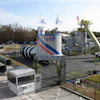
That realization set Black Gold on a path that would fundamentally change the company’s trajectory. In 2021, the contractor commissioned its first asphalt plant near Dorr, Michigan, entering plant ownership at a scale that many first-time owners are nervous to take on. Rather than buying a minimal configuration plant to get their feet wet, Black Gold invested in a high-capacity, expandable drum mix plant designed to support long-term growth from day one.
Interestingly, Black Gold’s growth mirrors the plant’s capabilities. Schaendorf started in the early 1990s working for Bob Thompson, owner of Thompson McCully Co, operating various paving equipment. From there, he began doing small paving projects, driveways, small parking lots.
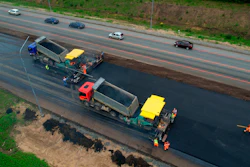
Today, the company operates as a full-service contractor. “We have our own asphalt milling machines, trucks, and excavating equipment,” Schaendorf said. “We can be a full-service paving company where many of the asphalt plants out there do not.”
That capability has opened doors. “We have grown from doing driveways to million-dollar State contracts,” he said.
Choosing Flexibility
From the outset, Schaendorf said the decision wasn’t just about owning a plant. It was about owning the right plant.
“We chose this plant configuration because it gave us the flexibility to run a wide range of mixes efficiently,” he said. “The combination of high-production capacity, multiple silo options, and integrated recycle capability was a perfect match for the type of work we do in West Michigan.”
That flexibility extended beyond mix design. Layout and material flow were central to their decision-making process when they set out to shop for the right asphalt plant for them.
“The configuration allowed us to streamline material flow while minimizing truck wait times,” Schaendorf said. “The plant layout, orientation, and load-out system aligned well with how we stage our trucking fleet and structure our daily operations.”
However, ease of maintenance was another major sticking point that drove their decision making process.
“We specifically selected a plant design that made maintenance access simple, reduced downtime, and improved reliability,” he said. “The ability to produce consistently during peak paving season was a non-negotiable requirement.”
Looking For The Long-Haul
When Black Gold evaluated plant manufacturers, Schaendorf said the focus was less on what the shiny, well curated brochures could show them, and more on the support that would come after the plant sale and commissioning. They weren’t just looking for a manufacturer; they were looking for someone to partner with them for the foreseeable future. That can be a challenge in the current industry environment, where many companies are stretched thin when it comes to staffing and availability, and acquisitions frequently shake up company structures and relationships.
“Dependability and long-term support were essential,” he emphasized. “We needed a manufacturer known for strong service response, reliable parts availability, and ongoing technical assistance during Michigan’s tight paving windows.”
Ultimately, their diligent search led the Black Gold to ALmix and, specifically, to an ALmix 114UF UF Series Asphalt Plant.
“We looked for a company with a proven history of building plants that perform reliably under high production demands and variable operating conditions,” Schaendorf said. “Energy efficiency, environmental performance, and mix quality were major selection criteria.”
Equally important was the willingness to collaborate. Obviously, every asphalt plant location comes with its own unique challenges and the solutions couldn’t be one-size-fits-all. Black Gold wanted someone who would tailor their solutions alongside them every step of the way.
“We wanted a manufacturer that would collaborate on project-specific layout needs rather than supplying a generic configuration,” he recalled. “Flexibility and engineering support were critical.”
Long-Term Mindset
Schaendorf explained the plant wasn’t just a response to their current demand levels. It was a strategic investment in what Black Gold wanted to become, where they wanted to go. That in itself is a risk, especially in the current economic environment of uncertainty, but they believed that the future was worth betting on.
“A major long-term goal for Black Gold is increased production autonomy,” he said. “This plant gives us the ability to control our own mix schedule, support additional crews, and expand project capacity.”
Future growth was built into the design from day one.
“The plant was selected with future scalability in mind,” Schaendorf said. “Additional silos, higher RAP capability, and expanded material-handling systems can be integrated as operations grow. Improved operational efficiency and reduced per-ton costs directly support our strategic goal of staying competitive while delivering high-quality asphalt products.”
By The Numbers
Since commissioning of their 114UF, Black Gold’s plant has become the backbone of its entire operation. They’ve had a few years now with it, now, and have a level of comfort and understanding of what it can deliver on a daily basis.
“We produce approximately 400,000 ton per year,” Schaendorf said. “It has grown steadily since the plant was erected in 2021.”
The storage alone has been a major driver of overall efficiency. “With 900 tons of storage capacity we have been able to increase our laydown capacity and crew downtime is at a minimum,” he added.
That success led to other additions, ensuring that capacity has continued to expand. “Since we erected the plant we have added four more cold feeders and an additional 300 ton storage silo,” Schaendorf said. “We have plans for additional equipment to be added in the near future.”
From ALmix’s perspective, the plant was never envisioned to be static.
“The plant is capable of producing 400 tons per hour under normal operating conditions,” said Mark Martin, service manager at ALmix. “That aligns well with Black Gold’s current annual production of approximately 400,000 tons, with room to grow.”
Martin said storage was intentionally prioritized. “With 1,200 tons of hot mix storage at commissioning and an additional 300-ton silo added later, the plant supports continuous paving operations while minimizing truck wait times and crew downtime.”
For Schaendorf, the most immediate benefit was operational control.
“We have been able to serve our customers better and have had more flexibility when bidding municipal and State projects,” he said. That’s been the real prize, and customer feedback has reinforced that decision.
“Our customers have commented that the location and layout of the plant site is ideal for staging and access to the highway,” Schaendorf said. “They also commented that the quality of the material is excellent.”
That maintenance access they were adamant about having has, also, proven to be more than a convenience.
“The accessibility of all major components has been one of the standout features,” Schaendorf said. “The plant was engineered with maintenance platforms, clear access points, and logical equipment spacing, which significantly reduces downtime during inspections and routine service.”
Innovation As A Force Multiplier
One of the big drivers for their continued growth has been the level of innovative features and benefits their new plant came with. For instance, ALmix’s in-house automation has played a major role in stabilizing production and improving consistency.
“The Insignia Control System has dramatically improved our mix consistency by controlling key variables such as burner settings, feed rates, drum temperatures, and silo management,” Schaendorf said. “Real-time sensors and automated adjustments keep production stable even during high-tonnage runs.”
The 114UF utilizes ALmix’s Insignia Control System, a total plant control system that leverages a plant-wide Ethernet network. This design not only allows all major plant components to operate as a single, unified system but also greatly simplifies control wiring, enhances plant data collection, and provides robust remote support and diagnostic capabilities.
“The integrated control reduces delays, improves response time to material changes, and ensures the entire production sequence stays synchronized,” he added, but noted that the remote access capabilities have been equally impactful in minimizing plant downtime.
“Remote troubleshooting has become one of our most valuable tools. Technicians can log into the control system, review alarms, analyze sensor data, and pinpoint the root cause of most issues without waiting for on-site support.”
On the ALmix side, they said that this increased level of connectivity has changed the service relationship with customer, as well.
“Software updates and system diagnostics can now be performed in real time. Due to the level of access provided by the ethernet network, many typical control-related problems that once required a service visit can often be resolved within minutes by our team of program engineers located in Fort Wayne, IN.”
Maintenance Lessons From A First-Time Owner
Annual maintenance has become a structured process, now, at Black Gold. This was important to them, as part of the process to ensure they maximized the return on their big investment.
“We approach annual maintenance with a structured shutdown plan, prioritizing major wear components such as the drum, baghouse, drag slat, and conveyors,” Schaendorf said. “We inspect everything on a scheduled interval and document all findings to track wear patterns from season to season.”
He offered some well-seasoned advice to other first-time plant owners, and those considering commissioning a plant of their own.
“Never cut corners on preseason inspections,” he emphasized. “Identifying failing bearings, worn flights, or compromised seals before production starts will save an enormous amount of time during the season.”
However, at the end of the day, there’s no substitution for good training.
“A well-trained crew can diagnose issues early, operate the plant more efficiently, and extend the lifespan of critical components,” Schaendorf said.
And Martin echoed that perspective.
“The customer who succeeds long term are the ones who plan shutdowns carefully, inspect wear components proactively, and keep critical spare parts on hand,” he said.
Looking back, Schaendorf doesn’t sugarcoat the challenge.
“When you put up a plant there is a very steep learning curve,” he said. “But when you have the best people working for you, the finest equipment, and the knowledge, you can achieve what you set out to do.”
For those looking to take the plunge for themselves, Schaendorf had one final piece of wisdom to impart.
“Know your market and your strengths,” Schaendorf said. “Set your goals and focus on where you want to go, the rest will follow.”
Martin sees Black Gold as a great model for first-time owners.
“They selected a plant that met current needs but didn’t limit future growth,” he said. “That long-term mindset is where real success happens.”