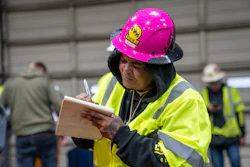
The construction workforce is changing. Experienced workers are retiring faster than their knowledge is being transferred to the next generation, altering jobsite risk in measurable ways.
Approximately 41% of the current construction workforce is projected to retire by 2031. At the same time, employees with less than one year on the job account for a disproportionate share of workplace injuries — roughly 35% across industries.
Inexperienced workers get hurt because they’re still learning, not because they’re careless. New hires may be unfamiliar with equipment, hesitant to question unsafe behavior, or under pressure to keep pace with seasoned coworkers. When tight schedules and labor shortages are added to the mix, shortcuts may become easier to justify.
These workforce pressures are also reshaping how companies approach worker safety. More than eight in 10 executives said they plan to increase investment in worker safety this year, citing goals such as managing rising healthcare costs and reducing workers’ compensation incidents.
Most construction leaders understand what safe work looks like. The challenge is maintaining consistent safety behavior as crews change, experience levels shift, and production pressures increase. In this environment, safety outcomes depend less on written policies and more on how expectations are reinforced on active jobsites.
The following strategies can help construction leaders reinforce safety expectations early, transfer critical knowledge and maintain consistency as workforce experience levels evolve.
Start Safety Before Day One
Safety conversations should begin during hiring — not orientation. Leaders who talk about safety early on — and frequently signal expectations — help build a culture of safety before an employee sets foot on a jobsite. When safety is treated as an afterthought during hiring, workers are more likely to treat it the same way once work begins.
Leaders who address safety in interviews and onboarding establish expectations early and make them easier to reinforce later — especially when schedules tighten or difficult conversations arise.
To build a strong safety culture with new employees:
- Include safety in job postings and interviews. Make clear that safe behavior is a condition of employment, not an optional value.
- Vet with purpose. Background checks, reference calls, and, when appropriate, motor vehicle record reviews can help identify patterns that matter to both workforce quality and jobsite risk.
- Ask safety-focused interview questions. Have candidates describe how they handled a safety concern or stopped unsafe work in the past.
- Be explicit about stop-work authority. Make it clear that workers — regardless of tenure — have the authority to stop unsafe work without fear of retaliation. Reinforcing this early — and often — makes it easier for new employees to speak up on the job.
- Explain how safety decisions are enforced. Clarify who is responsible for safety, how concerns are escalated and what happens when standards aren’t met. Clear structure reduces confusion and inconsistency later.
Make the First 90 Days Count
Injury risk is highest during a worker’s first year, making onboarding one of the most critical safety opportunities on a jobsite. Effective onboarding connects expectations to real-world work conditions.
During onboarding, focus on:
- Hands-on training. Demonstrate safe equipment use, required personal protection equipment (PPE), and job-specific hazards before production pressure increases.
- Designating a mentor. Pair new hires with experienced employees who actively reinforce safe behaviors through walkthroughs, task-level guidance and immediate feedback.
- Paced exposure. Avoid assigning new hires to complex or high-risk tasks before they’re ready. Develop a clear progression toward more strenuous or technically demanding work.
Transfer Knowledge Before It’s Gone
One of the most significant safety risks in construction is the loss of site-specific experience. Veteran workers carry practical knowledge that rarely appears in written plans — how equipment behaves in real conditions, which tasks require additional setup and where problems tend to surface first.
When that knowledge isn’t intentionally transferred, newer workers are left to learn through trial and error.
Try these practical methods to capture and share institutional knowledge:
- Pair experienced workers with newer hires during inspections or walkthroughs
- Ask senior employees to lead brief safety talks tied to real incidents
- Document lessons learned after near-misses and close calls
- Involve seasoned workers in updating safety procedures
This approach positions experienced employees as leaders — not just labor — to strengthen safety and teamwork.
Normalize Speaking Up
Silence is one of the most persistent barriers to safety performance. Crews work closely together, and no one wants to be seen as slowing progress or creating friction. Younger workers, in particular, may hesitate to challenge unsafe behavior to protect relationships. Leaders can change that dynamic.
Instead of framing safety as “reporting,” emphasize responsibility:
- Make stopping unsafe work an expectation, not an escalation
- Encourage peer-to-peer correction in the moment
- Respond quickly and calmly when concerns are raised
- Avoid blaming language when issues surface
When workers see that raising concerns leads to solutions — not punishment — they’re more likely to speak up before incidents occur.
Reinforce Safety Through Daily Work
Annual training and written programs establish standards, but they don’t determine behavior. Safety takes hold when it’s reinforced during daily operations — through task planning, hazard correction and supervisory response in real time.
Effective reinforcement includes:
- Short, focused safety talks during shift changes
- Supervisors consistently modeling safe behavior
- Regular jobsite inspections that include new workers
- Immediate correction of hazards when identified
Daily reinforcement turns expectations into habits.
Balance Accountability with Trust
Younger generations often expect transparency, explanation, and involvement. That does not require lowering standards but explaining the “why.”
A strong safety culture balances:
- Clear expectations: What safe work looks like
- Consistent accountability: What happens when standards aren’t met
- Visible support: Leaders backing employees who stop unsafe work
Accountability and trust aren’t competing priorities. Clear expectations, consistent enforcement and visible leadership support help workers understand where boundaries exist and when it’s appropriate to act. When those signals remain consistent, safety behavior is more likely to hold up under pressure.
Measure What’s Working
Safety programs lose momentum when outcomes aren’t tracked. Monitor indicators that reflect real behavior and emerging risk:
- First-year injury rates
- Near-miss reporting trends
- Training completion and refresh cycles
- Repeat hazards or recurring incidents
Share results with your team. When employees can see where progress is being made — or where gaps remain — they’re more likely to adjust behavior. Reviewing near-miss trends during toolbox talks, for example, can help crews identify recurring issues and correct them before injuries occur.
The Payoff: Safer Jobsites and Stronger Performance
Workforce turnover and retirements are reshaping how safety is learned on construction jobsites. With more new workers entering the field, the margin for inconsistent reinforcement is smaller than it once was.
Safety expectations are shaped daily — by how supervisors respond when work slows, how quickly hazards are corrected, and whether experienced employees are given time to coach newer ones.
Contractors who integrate safety into daily operations — rather than treating it as a standalone program — are better positioned to manage this transition. As experience continues to leave the workforce, the way safety is taught, modeled, and reinforced will increasingly influence jobsite performance, injury frequency and long-term risk outcomes.