
Time is one of the most valuable (and least controllable) resources on today’s construction sites. Labor shortages, material delays, equipment downtime, permitting issues, and unpredictable weather can all threaten progress, regardless of how well the project is planned. Every contractor has felt the frustration of trying to maintain control amid these variables.
That’s why the building industry continues to see a shift toward off-site methods such as modular and prefabricated systems. Among these, precast concrete systems stand out as a proven approach to bringing more certainty, predictability, and safety to the building process. Prefabrication moves much of the work off-site — performed in a controlled facility where weather, labor variability, and material storage don’t impact schedule — minimizing exposure to risks and inefficiencies that can derail a project.
However, for contractors to fully benefit from prefabricated systems, it’s essential to understand how to plan, coordinate, and manage this method effectively once it reaches the field. The following recommendations help general contractors, construction managers, and field teams maintain project control and achieve optimal results on-site utilizing precast systems.
Planning Ahead
Unlike traditional building materials that require multiple trades working simultaneously in the same area, precast installation reduces site congestion by streamlining the build. To prepare your job site for success:
- Plan for “just-in-time” deliveries. Precast components are typically shipped to the site in the exact order of installation. A well-organized site should be ready to receive up to 16 to 24 pieces per day, depending on project scale. This minimizes laydown needs but requires precise coordination with delivery teams.
- Provide direct truck-to-crane access. Each panel is hauled directly to the lifting hook. Clear pathways and properly graded surfaces are essential to prevent bottlenecks and maintain installation momentum.
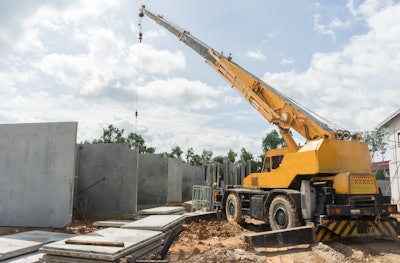
- Use one crane efficiently. Most projects require only a single crawler or truck crane for erection. Ensure the crane has appropriate capacity and reach for your heaviest panel and furthest lift point. To avoid delays, ensure logistics support all panel access and placement.
These fundamentals create an efficient rhythm on site, where trucks arrive, panels are lifted, and crews can work methodically without unnecessary downtime. When properly planned, about 25 panels can be set each day.
Maintain Control of Key Project Factors
When properly managed, precast systems give general contractors far greater control over the three most critical aspects of field performance: productivity, quality, and safety.
Productivity: Prefabricators typically use advanced ERP (Enterprise Resource Planning) systems to track every element of production and delivery. These systems track manufacturing schedules, the number of pieces shipped, their arrival dates, and compare installation rates to project estimates. Contractors should request weekly progress reports to monitor alignment with the schedule and quickly address any emerging delays. Having this real-time visibility allows teams to make informed adjustments, such as adjusting crew hours or resequencing work to stay on track.
Quality Control: Much of the quality assurance work occurs off-site under factory-controlled conditions — an enormous benefit. Each component is cast, cured, and finished under consistent supervision and inspection. Once panels arrive at the site, quality oversight shifts to the erection foreman and field superintendent. Self-erecting contractors should ensure supervisors have access to the shop drawings and tolerance criteria. Supervisors should verify alignment with each placement to protect both performance and aesthetics, reducing costly rework later.
Safety: Safety is central to every precast operation. These components are large and heavy, requiring careful planning for lifting and bracing. Most fabricators develop site-specific safety plans for each project, which general contractors should review and incorporate into their safety program. Every worker on the crew should have the authority to “stop work” if unsafe conditions arise. It’s recommended, but not required, that all team members have current OSHA 10-hour or 30-hour training, along with refresher certifications every two years. Communication between crane operators, riggers, and signalpersons must be constant and precise to prevent incidents.
 Unitized facade systems, such as this prefabricated panel, already include windows and insulation, reducing trade overlap, improving efficiency, and simplifying installation.Wells
Engage Your Prefabricator Early
One of the most valuable recommendations for contractors is to involve your prefabrication partner as early as possible to ensure efficient designs to support logistics planning. Early collaboration yields:
- Better planning for site logistics
- More constructible design details
- Fewer coordination conflicts with other trades
- Greater efficiency in crane and delivery layouts
During preconstruction, your building solution provider can evaluate truck routes, identify staging areas, and recommend crane pad or road locations that minimize movement and optimize reach. They can also advise on crane radius limitations, erection sequences, and connection detailing — insights that teams find difficult to resolve later in the process.
Involving your precast team early also reduces one of the biggest project headaches: trade interference. Too often, site work or underground utilities overlap with scheduled precast delivery and installation zones. Early planning helps prevent these conflicts, allowing crews to deliver and erect panels seamlessly rather than waiting for clearance or site rework.
Choose the Right Equipment for the Job
Different crane types offer distinct advantages depending on project constraints:
- Crawler cranes are versatile and can move quickly between picks but require more setup time.
- Truck or hydraulic cranes can handle heavier lifts but take longer to reposition.
- Tower cranes may be necessary for high-rise or urban projects where ground space is limited, though they come with shared use and limited lift capacities.
Selecting the right crane early and coordinating with other trades using similar equipment avoids scheduling conflicts and improves overall site flow.
 A crawler crane was selected for this large data center project for its mobility, lifting capacity, and efficiency in placing heavy prefabricated components across the expansive site.Wells
Coordinate Trades and Sequence Thoughtfully
Efficient precast installation depends on precise sequencing and proactive communication. While deliveries may be scheduled, other trades’ ongoing work can sometimes block crane paths or staging areas. To avoid these costly slowdowns, develop a shared logistics plan with all major trades and your prefabrication partner. This plan should define delivery routes, crane zones, laydown areas, and safety buffers.
Ideally, the prefabricator’s project manager and field superintendent participate in scheduling meetings well before groundbreaking. Their familiarity with panel sequencing can help determine optimal erection order, temporary bracing needs, and how follow-on trades (such as glaziers or waterproofers) will tie into the structure.
Teams model many modern precast projects in 3D BIM environments, which can be integrated with the overall building model for clash detection. Using this technology, contractors can visualize how panels interact with structural and MEP elements before they’re installed—avoiding field conflicts that can cause costly delays.
The Bottom Line
A thoughtfully managed precast construction offers contractors clear, measurable benefits:
- Predictable and achievable timelines
- Fewer trades and less site congestion
- Reduced equipment and manpower needs
- Enhanced control over quality, safety, and productivity
Ultimately, precast gives contractors something invaluable: control. Panels are manufactured under ideal conditions, shipped on demand, and installed in a fraction of the time required for traditional building methods. That speed to delivery not only accelerates schedules but also stabilizes costs, minimizes risk, and delivers a cleaner, safer job site.
For contractors ready to take advantage of modern prefabrication, partnering early and planning carefully are the keys. With the right collaboration and foresight, precast systems become not just a material choice but a strategic advantage that drives every project toward greater certainty and success.