
For decades, much of the construction trades, and especially the asphalt industry, have been built on hierarchy. The boss gives orders, the field gets it done, and the office handles the paperwork.
These business leadership structures familiar to most people today, were largely built and reinforced during the post-war era by those who'd served under similar structures. When they returned home, they brought those structures and leadership styles back with them.
But talk to the next generation of leaders, and you start to hear something different.
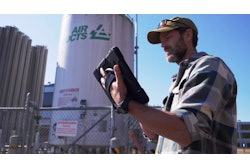
Bryce Harem, general manager at Central Paving in Ellensburg, Washington, represents that change. I met with him outside of his home, surrounded by open pasture and the soft hum of a valley town, Harem reflected on how his views on leadership and company culture have evolved over time, and how that shift has reshaped both his team and his outlook.
“This is the spot,” he said, looking across a vast field of quiet farmland. “This is what I want, and [some version of this] is what we all need. Coming out here, it's perfect.”
For someone who spends his days managing complex municipal projects, negotiating contracts, and coordinating field operations, the ability to disconnect and recharge matters.
“I like space,” he said. “We moved out here for space and slow, and now the asphalt industry is anything but slow. But I come out here and I get to be slow.”
Harem’s perspective on leadership is grounded in experience across both sides of the construction divide: office and field, white collar and blue collar. He’s quick to acknowledge the tension that sometimes exists between the two worlds—and the need to bridge it.
“There’s definitely, not just in the asphalt industry, but in construction as a whole, a divide between the hard working, work-with-your-hands, dirty-hands, clean-money guy and what they consider white collar, which is me,” he said. “To a lot of people, I'm considered white collar because I went to college and because I didn't come through the ranks of the ditch and the shovel.”
But he said something that kind of made something click in my mind.
“Everybody has a role in the blue collar industry,” he said. There's a certain clarity to that I understand, as a former steel worker myself, but when he said it our conversation came into full view. On the blacktop, everyone knows the job and their purpose in getting that job done.
That’s an idea many asphalt contractors can get behind, it makes sense and the next generation of leaders are starting to full embrace it and other newer ideas as they step into management roles. The best teams today understand that operational success depends on mutual respect and shared purpose, not just titles or degrees.
From “Boss” to Role Player
Like many in his generation, Harem admits he once equated leadership with authority. “For more than a decade, I chased the title. I wanted to be the boss,” he said. “I was the young project manager and estimator for various companies, always youngest, and you didn’t get to be included in anything.”
That drive paid off when he joined Central Paving. “Within two years, I was offered the GM position,” he said. But the first year didn’t go as planned. “The problem is I failed terribly. The great thing about Central Paving is that everybody on the team will say we failed, because we did. But I put a lot of it on myself, and a big part of it was I was focused on me, on my position, where I wanted to be.”
He traced that early misstep back to how project managers were often trained. “As a PM, I was taught that I was the boss, which is entirely incorrect,” he said. “I wasn’t the boss. You’re a role player.”
That realization changed everything about how he manages today. “My job in the field is to make sure all the lights are green.”
Building Trust Inside And Out
That clarity of purpose had ripple effects far beyond the office. It’s changed how Harem thinks about trust, both within the company and with clients. He regularly reminds his team that sales don’t stop once the contract is signed. The salesman or saleswoman, the account manager, they will sell opportunity one. What goes down in the field, sells opportunity two.
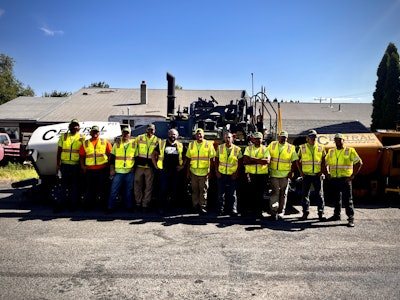
In other words, every paving crew member is part of the sales team. The way they conduct themselves on a jobsite, the way they talk to city officials, residents, or property managers, can define the company’s reputation and impact future opportunities.
“There’s people who will say that in the private side, commercial, residential, you don’t need to be low bid,” Harem explained. “And it’s very true. You build off relationships. You don’t necessarily have to be low bid if you take care of the customer.”
Even in the public or municipal market, he said, relationships matter. “It’s competitive. They don’t have to take low bid, but most commonly do, unless you’re a sub they know is going to show up, be dependable, and be the one they can count on to take care of their headache. And if you can solve their problems, oftentimes you don’t have to be the low bid.”
Lessons In Perspective
Perspective is a recurring theme in Harem’s story. It shows up in how he balances his family life, in how he sees the relationship between management and labor, and in how he defines success.
“The only reason I consider myself slightly successful, is because of the perspective change,” he said. “You know, the office member who gets the entitlement that they are better than somebody in the field is asking for it.”
That humility came from seeing failure, not as defeat, but as information.
“I had to learn that leadership isn’t about being the smartest guy in the room, it’s about creating the space for everyone else to succeed," Harem said.
In an industry where equipment costs, bid margins, and supply prices dominate most business conversations, culture might sound soft. But for Harem, culture is Central Paving’s competitive edge.
“It’s about how we treat each other, how we handle mistakes, and how we grow together,” he said. “We play a critical role in the office, but the field those guys are the heartbeat. If you lose that connection, you lose the company.”
That mindset is contagious. It shapes hiring decisions, retention, and the daily atmosphere on the job. Younger employees entering the workforce often prioritize work-life balance, respect, and a sense of purpose over just pay. Leaders who can provide that will find themselves with a more engaged, loyal, and productive workforce.
Ellensburg itself has a way of reinforcing these lessons. It’s a place where the horizon is wide, the air is clear, and priorities feel simpler. Growth is coming. There are new developments, more people moving from the coast, but for Harem, that mix of expansion and tradition mirrors the balance he tries to strike at work.
“You will have people that say this town is going to hell, only because it’s growing,” he said. “But if this is hell, then sign me up.”
That balance between ambition and contentment, growth and gratitude is perhaps the clearest reflection of where modern leadership in the asphalt industry is heading.
Takeaway for Contractors
A few lessons stood out to me from Bryce's story that I think could be useful to other contractor's in his shoes:
- Leadership is service, not status. Managers exist to clear the road for their teams, not to direct traffic from the sidelines.
- Culture compounds. A healthy workplace multiplies productivity, safety, and retention. A toxic one drains all three.
- Perspective changes everything. Failure, when viewed correctly, is feedback. It builds resilience and empathy.
- Trust is the new bid advantage. In a world where every penny counts, relationships still win the job.