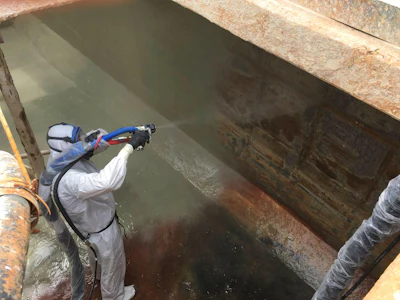
Spray-applied polyurea is one option for concrete projects requiring fast return to service, crack-bridging capability, and a seamless membrane. However, its performance can be compromised when the concrete is wet, contaminated, weak, or poorly prepared. For concrete contractors, the real question is rarely, “Is polyurea good?” It is, “Are the substrate, exposure conditions, and project requirements suitable for a spray-applied polyurea system?”
This guide focuses on two applications where concrete contractors are commonly asked about polyurea: waterproofing and secondary containment. It explains where the material may fit, where it may not, and what to evaluate during a bid walk before committing to a price and schedule.
Note: This guide is written from a technical support perspective and draws on the questions contractors commonly raise when a coating project goes right and when it does not. Requirements such as film thickness, primer selection, surface preparation, and chemical resistance depend on the selected coating system, the manufacturer’s technical data sheets, and the project specification. The information that follows should be used as a framework for evaluating project conditions and identifying the information needed before selecting a system.
What Should Be Considered When Selecting a Polyurea System for Concrete?
Four considerations influence the selection of a polyurea system for concrete: cure speed, elongation, adhesion to the prepared substrate, and resistance to the intended exposure. Each can provide benefits for certain applications but also creates limitations that must be considered during system selection.
Fast cure.
Spray-applied polyurea cures rapidly, often allowing foot traffic within minutes and return to service the same day. This can significantly reduce downtime compared with conventional coating systems. However, the rapid reaction leaves little time for adjustments during application. Edges, penetrations, joints, and terminations must therefore be properly prepared and detailed before spraying begins.
Elongation and crack bridging.
Many polyurea formulations can elongate several hundred percent before breaking, allowing the membrane to bridge hairline shrinkage cracks. However, crack-bridging capability has limits. A membrane may accommodate minor movement within the limits of the system design, but it cannot correct concrete that continues to move. Active joints and structural cracks require details designed to accommodate that movement.
System adhesion.
Proper adhesion depends on the condition and preparation of the concrete, the selected primer, application conditions, and compatibility between the components of the coating system. Moisture, contamination, laitance, weak concrete, and an inadequate surface profile can all contribute to adhesion failure.
Resistance to the service environment.
Chemical and abrasion resistance vary among polyurea formulations and must be evaluated against the intended service conditions. Chemical-resistance data should be reviewed based on the actual chemical, concentration, temperature, exposure duration, and type of exposure. Splash, intermittent contact, and immersion should not be treated as equivalent.
 @vadish - stock.adobe.com
Where Does Polyurea Work for Concrete Waterproofing?
A spray-applied polyurea system may be suitable for waterproofing projects that are accessible for spraying, have sound concrete, and benefit from a seamless membrane and short downtime. Final system selection must also consider moisture conditions, movement, exposure, traffic, detailing, and project-specific performance requirements.
Several applications may fit that profile:
- Traffic-bearing decks and podiums. A spray-applied membrane reduces the field seams associated with sheet systems, while the rapid cure of polyurea can reduce closure time for parking structures and plaza decks. A suitable wear surface or topcoat may be required where the system will be exposed to vehicle or foot traffic.
- Planters, water features, and tanks. Complex geometry, corners, and penetrations can be easier to cover with a spray-applied, seamless membrane than with cut-and-lap sheet systems. Potable-water approvals, immersion suitability, and other regulatory requirements must be confirmed before specifying the system.
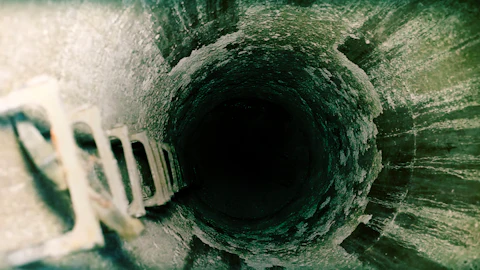
- Tunnels, culverts, and infrastructure repairs. The rapid cure of spray-applied polyurea can be an advantage on projects with short shutdown windows. The coating must still be applied to clean, sound, properly prepared, and profiled concrete.
- Roof and terrace slabs. Spray application can conform to complex roof details, provided the concrete meets the coating system’s moisture requirements and the structure has proper drainage.
For any of these applications, ask three questions first:
- Is the concrete sufficiently dry, and can that be demonstrated through appropriate testing?
- Is the substrate sound, with laitance, contamination, and weak concrete removed?
- How will cracks, movement joints, terminations, and penetrations be detailed?
If any answer is uncertain, resolve it before pricing the work or selecting the coating system.
 Ultimate Linings
When Is Polyurea a Good Fit for Secondary Containment?
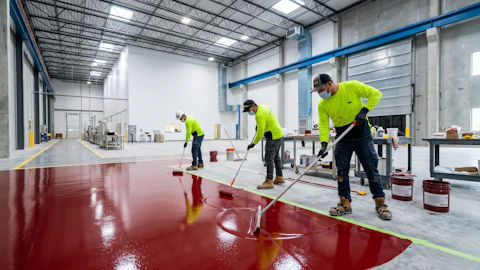
A polyurea system may be suitable for secondary containment when the selected formulation is compatible with the chemicals and exposure conditions, the concrete can be properly prepared, and the project benefits from a seamless lining system and minimal downtime.
Potential applications include diked tank areas, sumps and pits, loading pads, and washdown zones.
Like other fluid-applied lining systems, a spray-applied polyurea membrane reduces field seams and potential leak paths. Its rapid cure provides an additional benefit for facilities where an extended shutdown is not practical. Even so, containment work presents greater risk than a typical decorative or protective floor coating because failure could allow a spill to reach the surrounding environment.
Before bidding, work through the following checks:
Chemical compatibility. Obtain a complete list of the chemicals, concentrations, exposure conditions, and operating temperatures. Compare that information with the coating manufacturer’s immersion and exposure data. Short-term splash exposure, intermittent contact, and long-term immersion are not the same service conditions.
Regulatory and project requirements. Containment capacity, freeboard, and liner-performance requirements can vary by jurisdiction and by the materials being stored. Confirm the applicable requirements with the owner, project engineer, and other appropriate parties rather than making assumptions.
Concrete condition. Spalls, cracks, honeycombing, and other surface defects must be properly repaired before coating. Cracks and joints that move require details designed to accommodate movement rather than relying on the membrane alone.
Terminations and penetrations. Pipe penetrations, drains, wall-to-floor transitions, and terminations are common failure points. Plan the required repairs, reinforcement, and termination details before application begins.
Inspection plan. Agree on the required thickness measurements for each component of the coating system. Wet-film thickness may be measured for primers, topcoats, or other system components where applicable, but spray-applied polyurea thickness must be verified after application. Also establish requirements for holiday testing, adhesion testing, repair procedures, and acceptance criteria before work begins.