As we approach 2026, the construction industry faces a critical gap: demand for electric vehicle (EV) infrastructure is exploding while the resources to build it are shrinking. Skilled labor, materials, and time are all in short supply. To meet accelerating EV charging deployment targets, contractors need concrete installation methods that overcome labor shortages, supply chain volatility, and compressed project schedules.
This article will discuss:
- 2026 EV infrastructure challenges for contractors
- The costs of cast-in-place concrete installation
- How precast concrete bases address deployment bottlenecks
The 2026 “Perfect Storm”
According to the National Renewable Energy Laboratory (NREL), in order to meet the projected 33 million EVs expected on the road by 2030, the United States will need 28 million charging ports. While private residential chargers will form the basis of the national charging ecosystem, they will need to go hand-in-hand with public fast charging to enable a seamless, reliable charging network. Despite federal uncertainty, individual states and organizations continue to advance funding for EV charging infrastructure, such as California’s $55M Fast Charge California project, aimed at increasing public and business charging sites statewide.
However, with 92 percent of construction firms reporting difficulty finding qualified workers, a major gap has arisen between the demand for increased infrastructure and the supply of contractors who can get the job done. Additionally, with potential tariff impacts looming and a constant threat of supply chain delays, contractors will continue to face many obstacles in getting projects to the finish line on time and within budget.
The Bottom Line
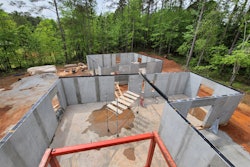
Electric vehicle chargers require a specialized, sturdy base to ensure they are mounted to the ground safely and durably. Traditionally, cast-in-place concrete bases have been a go-to solution, requiring the construction of forms, rebar cages, pouring concrete on-site, and waiting between 7-28 days for full curing, if everything goes as planned. Unforeseen circumstances such as weather delays and labor shortages can extend timelines drastically, impacting overall project completion dates.
The traditional cast-in-place process requires coordination between contractors, electricians, inspectors, and more, adding to the intricacy of the installation process. Further, when charger pedestals set in these concrete bases inevitably require maintenance or replacement, the bases must be excavated, re-engineered and repoured, starting the entire process over again. Besides the budget implications, this extensive and complex rework adds significantly to the time the critical charging station hub is offline, directly impacting revenue and customer experience.
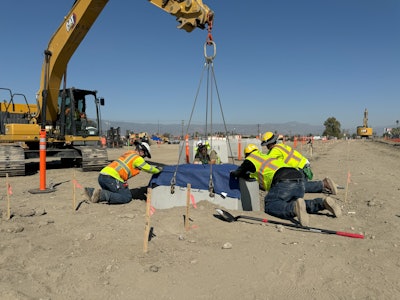
Picture this: your new EV charging project site has permits secured, grading complete, and chargers ready to install. Instead of waiting weeks to pour concrete onsite, you install prefabricated bases in hours. These bases arrive manufactured offsite, eliminating weather delays, onsite labor shortages, and construction waste.
The efficiency gain is structural. Traditional construction is sequential: dig, pour, wait for the concrete to cure, then install. Precast makes it parallel. Bases are manufactured during planning phases and delivered before installation day, ready to set immediately.
Factory production brings quality control and predictability. It shifts labor from unpredictable job sites to controlled manufacturing environments, allowing contractors to accomplish more with smaller onsite crews. What traditionally required weeks of waiting for concrete to cure now happens in hours. With labor shortages slowing projects across the industry, precast bases keep installations on schedule when traditional methods would stall.
 EV chargers being installed onto concrete bases.Pre-Con Products
In the high-volume Greenlane Infrastructure project in California, opting for precast concrete charger bases over cast-in-place enabled the installation of 50+ units in days, eliminating weeks of cure time. This efficiency ensured the charging site was fully operational in only nine months, helping the owners meet grant obligations before year-end and accelerating revenue generation for the operator in a high-traffic corridor.
What’s Next?
Contractors should keep these in mind going forward:
- Competitive edge is key. Contractors who bid on EV charging site projects using precast concrete methods are better positioned to win more bids in 2026. Guaranteeing tighter schedules and lower risk of delays, precast concrete will set contractors up for success, enabling efficient, cost-effective projects.
- Sustainability remains a differentiator. EV charging site operators inherently prioritize sustainability, so think about how your methods can align with those preferences. Precast concrete reduces components like onsite waste and truck traffic, adding to the overall sustainability of projects.
- Time is of the essence. For the continuing rollout of EV charging infrastructure, efficiency is paramount in the coming years to ensure EV charging demand is met across the nation. Precast concrete bases are a key method contractors can employ to support an efficient, effective, and durable expansion of the EV charging network.
- Prioritize Total Installed Cost (TIC): Don't focus on raw material cost when comparing methods. The true financial benefit of precast concrete is realized at scale, with total installed cost (TIC) typically 15–25 percent lower than traditional pour-on-site methods. This gain is achieved by minimizing high-cost, on-site labor from weeks to days, eliminating budget leaks from weather delays, and accelerating the project timeline to generate revenue faster.
For contractors in 2026, speed could very well be the new competitive advantage with precast concrete bases opening an opportunity for that edge.