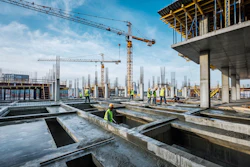
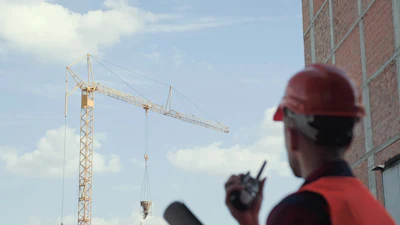
For decades, construction superintendents have been the nerve center of every successful project. They are the individuals who translate plans into reality, ensuring that every phase of construction progresses smoothly and efficiently. Their responsibilities are vast and multifaceted: coordinating dozens of subcontractors, monitoring quality, enforcing safety standards, solving unexpected problems, managing material deliveries and answering an endless stream of questions from stakeholders. All of this must be accomplished while keeping the project on schedule and within budget.
That job has never been simple. Today, it is becoming even more demanding.
Labor shortages continue to stretch field teams thin, forcing superintendents to do more with fewer resources. Projects are larger and more complex than they were even a decade ago, often involving intricate designs, advanced materials and tight timelines. Owners and clients now expect unprecedented levels of documentation and transparency, requiring detailed records of progress, safety compliance and quality assurance. At the same time, schedules leave little room for error, and even minor delays can cascade into significant setbacks.
Compounding these challenges is the sheer volume of data generated on modern construction sites. Every project produces mountains of information — from daily reports and progress photos to schedules, inspection records, RFIs and material delivery logs. While access to this data is valuable, the real challenge lies in sorting through it efficiently and identifying what truly matters. Superintendents often find themselves overwhelmed, spending valuable time searching for insights instead of acting on them.
This is where artificial intelligence (AI) is beginning to make a meaningful impact.
The Information Challenge on Today's Jobsites
Despite the growing attention surrounding AI, it is not replacing the superintendent. Instead, it is becoming another essential tool in the construction toolbox. Much like laser levels, drones, and mobile project management software transformed the jobsite over the past two decades, AI is emerging as a technology that enhances the capabilities of experienced professionals.
AI excels at processing large volumes of information quickly and accurately. It can identify patterns, detect anomalies, and highlight trends that might otherwise go unnoticed. For superintendents, this means having access to actionable insights without the need to manually sift through countless documents and images.
One of AI’s greatest strengths is its ability to identify issues before they become costly problems. Traditionally, construction has been reactive. A mistake is made, someone eventually notices it and the team scrambles to correct it before it affects subsequent work. Unfortunately, by the time many issues are discovered, they have already impacted the schedule or resulted in expensive rework.
AI is helping shift this paradigm from reactive to proactive.
AI Is Becoming a Second Set of Eyes
Computer vision systems are at the forefront of this transformation. By analyzing thousands of jobsite images and comparing them with previous site conditions, schedules, or digital building models, AI can flag discrepancies and potential issues early. It can identify work that appears incomplete, detect quality concerns or highlight areas where progress is not aligning with expectations.
Instead of discovering a problem during a weekly walkthrough — or worse, after another trade has already built over it — the superintendent can address the issue while the fix is still relatively simple and cost-effective. This early detection capability can significantly reduce rework, improve quality and keep projects on track.
Beyond identifying problems, AI is also changing how contractors think about documentation. Most projects already capture hundreds or even thousands of photos during construction. Historically, these images served primarily as records for future reference in case disputes or questions arose. However, AI transforms these photos into a valuable source of operational intelligence.
Rather than manually reviewing images one by one, AI can automatically recognize equipment, materials, completed work, housekeeping conditions and other jobsite activities. Over time, these observations create a comprehensive and dynamic picture of what is happening across the project. Superintendents gain an additional layer of visibility, allowing them to monitor progress more effectively and identify trends that require attention.
Turning Jobsite Data into Better Decisions
Material management is another area where AI delivers measurable value. Controlling material costs has become increasingly important, yet many contractors still lack visibility into what happens to materials once they arrive onsite. Waste is often accepted as an unavoidable aspect of construction, rather than being analyzed as a potential source of insight.
AI-powered image recognition is changing this perspective. By monitoring dumpsters and waste streams, AI can identify which materials are being discarded, estimate quantities and uncover patterns that point to inefficiencies. For example, excessive waste of a particular material might indicate over-ordering, improper storage or installation errors.
These insights enable contractors to make more informed purchasing decisions, reduce waste and improve overall project profitability. Additionally, they support sustainability initiatives by helping teams minimize environmental impact and maximize resource efficiency.
AI also excels at integrating information from multiple sources. In a typical construction project, data is scattered across various systems — daily reports, schedules, inspection records, photos, RFIs and project management platforms. Each of these sources provides a piece of the puzzle, but they are often disconnected.
By bringing these data streams together, AI creates a unified view of project performance. Superintendents can quickly access relevant information, identify correlations and make decisions with greater confidence. Instead of spending time searching for data, they can focus on interpreting insights and taking action.
Less Paperwork, More Time Leading the Project
One of the most significant benefits of AI for superintendents is the reduction in administrative workload. Field leaders today spend a considerable portion of their time on documentation tasks — preparing daily reports, organizing photos, responding to RFIs and communicating updates to stakeholders. While these tasks are essential, they often take time away from managing crews and addressing on-site challenges.
AI is beginning to automate many of these repetitive processes. For example, meeting notes can be transcribed and summarized automatically, daily reports can be generated from data collected throughout the day, and progress updates can be compiled using a combination of schedules, photos and field observations. This automation reduces the time and effort required to maintain accurate records.
Importantly, AI does not replace the superintendent’s judgment. Instead, it supports their work by handling routine tasks, allowing them to focus on higher-value activities. With less time spent on paperwork, superintendents can dedicate more attention to walking the site, coaching crews, coordinating subcontractors and ensuring that work is performed safely and efficiently.
Technology Supports Experience — It Doesn't Replace It
Despite its capabilities, AI cannot replicate the experience and intuition of a seasoned superintendent. Construction is inherently complex, with countless variables that require human judgment and adaptability. AI can analyze data and highlight potential risks, but it cannot fully understand the nuances of human behavior, trade coordination or the unique challenges of each project.
In fact, the rise of AI makes experienced superintendents even more valuable. Those who understand how to interpret AI-generated insights and apply them effectively will have a significant advantage. They can use AI as a tool to enhance their decision-making, rather than relying on it to make decisions for them.
The superintendent’s role has always been about making informed decisions under pressure. AI simply provides better information to support those decisions. It acts as a force multiplier, enabling superintendents to manage complexity more effectively and respond to challenges with greater confidence.
Looking Ahead: The Future of AI on the Jobsite
As AI technology continues to evolve, its applications in construction will expand. Future systems may offer even more advanced predictive capabilities, helping superintendents anticipate delays, optimize schedules and allocate resources more efficiently. Integration with other technologies, such as Building Information Modeling (BIM), Internet of Things (IoT) devices, and wearable sensors, will further enhance visibility and control on the jobsite.
However, successful adoption of AI will depend on more than just technology. It will require a cultural shift within the industry, with organizations embracing data-driven decision-making and investing in training for their teams. Superintendents will need to become comfortable working alongside AI tools, understanding their capabilities and limitations.
Ultimately, the goal is not to replace human expertise, but to augment it. By combining the strengths of AI with the experience and judgment of skilled professionals, the construction industry can achieve new levels of efficiency, quality and safety.
Embrace the Change
Like every meaningful innovation that has found its way onto the jobsite, AI is not changing the importance of the superintendent — it is enhancing it. By helping field leaders process information more effectively, identify issues earlier, and reduce administrative burdens, AI is making one of construction’s most demanding roles more manageable.
Superintendents who embrace AI as a tool will be better equipped to navigate the complexities of modern construction. They will have the insights they need to anticipate problems, communicate more effectively and keep projects running on time and within budget.
In an industry where margins are tight and expectations are high, the ability to make smarter, faster decisions is invaluable. AI is not a replacement for experience — it is a powerful ally that empowers superintendents to build smarter, safer and more efficiently than ever before.