How Managing Jobsites With Digital Tools Can Save You Time and Money
Uncover what today's digital data management solutions can do for your organization, and learn how to use them to improve processes and earn more money.
Digital jobsite management tools replace paper-based processes with real-time data systems that improve accuracy, streamline workflows, and reduce costs. Construction firms adopting these solutions report up to 15% productivity gains and 6% cost reductions while saving workers 5+ hours weekly on administrative tasks.
Productivity boost: Construction firms see up to 15% field productivity gains and 6% cost reductions when adopting digital tools and real-time workflows
Time savings: Workers save an estimated 5+ hours per week per employee previously lost to manual data gathering and paperwork
Maintenance cost reduction: Predictive maintenance strategies can reduce overall maintenance costs by 18–31% and decrease downtime by 30–50%
Key capabilities: Digital tools offer real-time payload feedback, equipment tracking, predictive maintenance alerts, compliance documentation, and centralized fleet monitoring via mobile interfaces
Implementation approach: Start small by digitizing daily walkaround reports or safety checklists, then scale at a manageable pace
Are you still relying on physical paperwork to track data and run your operation? It may be the way you’ve always done things, but this strategy is inefficient and increases the risk of losing essential information. And as projects grow in complexity and scope, paper-based methods can quickly go from being the traditional option to becoming a liability.
Making the switch to digital data management may seem complicated, but it’s a change that can help you find new ways to improve your processes and earn more money.
A range of available technologies can streamline every step of a project, from initial bids and contracts to material orders and equipment logs, helping you reduce downtime and run your business more efficiently.
Challenges of Traditional Paper-Based Data Management
The established method of using paper records comes with built-in frustrations. One of the biggest challenges is version control. Updating paperwork manually is a slow process, making it difficult to guarantee that everyone is working off of the latest report or plan. If a change order is sitting on a clipboard at the site instead of in the office, decisions are delayed and costly rework becomes a real risk.
Paper processes also introduce the potential for data entry errors. Transcribing handwritten notes from paper logs to spreadsheets can result in mistakes. For operations where tons-per-year targets drive decision-making, paper errors distort the true picture of site performance.Volvo CE
The Benefits of Real-Time Data Management
Moving to paperless data management and leveraging connected telematics systems simplifies site chaos. These solutions offer many benefits, including:
Improved accuracy — Digital forms can be updated and shared in real time, ensuring that crews are working with standardized, accurate data at all times. And when you have the most up-to-date information, you make better decisions and gain more control. For example, one challenge in quarry operations is when fully loaded trucks leave the site without being registered (and therefore aren’t invoiced). Manual operations lead to this type of product loss. But digital systems register every load with the help of connected machines, giving production crews better control of their total operations and a quick ROI.
Faster workflows — Instant alerts for change orders, inspection reports and other important information keep all areas of your site moving smoothly. You can also pull up a machine’s operational history in seconds rather than digging through boxes or filing cabinets.
Fleet protection — Equipment checks can be easily managed and tracked when maintenance, service schedules and machine performance issues are logged digitally in real time. Automated machine alerts can also flag problems faster and bring potential issues to your attention before they become problems.
Simplified compliance — You get immediate access to safety and regulatory data during audits. This is especially important on highly regulated jobsites.
What Capabilities Can Digital Tools Offer?Volvo CE
There are a wide range of digital data management solutions, each with varying capabilities. Here are some common features that these tools provide:
Digging and loading insights — When your system has features like on-board weighing or digital mapping, it replaces rough estimates with real-time payload feedback. You have a digital receipt for every bucket and every cycle. Instead of relying on handwritten load tickets that are easily lost or misread, these solutions sync work orders and scale tickets automatically between the machine cab and the site office. This cuts out paper and eliminates communication errors and missed invoices.
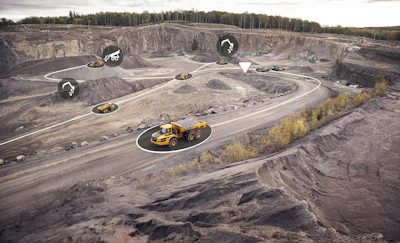
Complete jobsite visibility — Connected mapping tools let you track real-time positioning of equipment and workers, improving both safety and efficiency. Performance indicator software also allows you to capture cycle data and production metrics in real time and view that information on dashboards.
Trend data for predictive maintenance — According to a 2024 analysis by the Association of Equipment Manufacturers (AEM) and DozerHub, predictive maintenance strategies for heavy equipment can reduce overall maintenance costs by 18% to 31% and decrease downtime by 30% to 50%. Telematics solutions can help you identify critical machine trends and fix small problems before they become major failures.
Centralized monitoring — Many of these tools use mobile-friendly web interfaces, allowing you to monitor fleet health and metrics on a tablet or phone. Getting at-a-glance insights helps you spot trends or issues across the operation.
Targeted operator training — These systems can flag damaging habits like rapid hot-engine shutdowns or high-speed gear shifts so you can put targeted operator training in place as needed.
OEM monitoring and support — Telematics can generate more data than any fleet manager has time to review. Some OEMs offer services to help you filter that telematics noise and focus on what’s most important. For example, if monitoring shows a high coolant temperature combined with a low coolant level, it could indicate a blown hose or a slow leak. Thanks to monitoring services, the dealer can alert you and have a part waiting for the repair before a major failure occurs.
Transform Data Into a Competitive AdvantageVolvo CE
You don’t need to move to an entirely digital operation overnight. Start small and scale up at a pace that feels manageable. A good first step could be digitizing the daily walkaround report or pre-shift safety checklist and expanding from there.
Digital data management goes beyond eliminating paperwork. It can also have a big impact on your bottom line. A McKinsey & Company analysis showed that construction firms adopting digital tools and real-time workflows boost field productivity by up to 15% and lower overall project costs by up to 6%. Also, field workers save an estimated 5+ hours per week per employee previously lost to manual data gathering and administrative tasks. When your data is searchable and easy to access, it gives your operation a leg up and can yield a direct return on investment.
 Volvo CE
 Volvo CE
 Volvo CE

 Volvo CE