
When you read as many press releases as I do in a day, certain patterns start to stand out.
Not industry trends — those are genuinely worth paying attention to. I’m talking about the language. The same words show up again and again, regardless of the product, company or announcement. Over time, they start to blend together. And when everything is described the same way, it becomes harder to understand what really matters to the audience at large.
Here are a few of the biggest repeat offenders lately, and what they really mean after stripping away the marketing lingo.
1. “AI-Powered”
This phrase is everywhere, from scheduling tools to safety systems. In some cases, it reflects meaningful capabilities. In others, it may simply refer to automation happening behind the scenes.
A useful question for contractors: Is this helping improve decision-making, or just speeding up existing processes?
2. “Autonomous”
As automation and equipment technology advance, “autonomous” is appearing more frequently in product announcements. In some cases, it refers to fully self-operating systems. In others, it may describe features like assisted controls or semi-automated functions.
Understanding the level of autonomy — and where human input is still required — is key to evaluating how this tech fits on a jobsite and whether it’s important to the “every contractor”.
3. “Real-Time Visibility”
Access to real-time data can be powerful. But visibility alone doesn’t drive results. The value comes from how that information is used in the field.
When evaluating these claims, I like to look at what actions the data allows contractors to do on the jobsite, and not just how quickly it’s delivered.
4. “Sustainable” / “Sustainability”
These terms show up consistently in product announcements, from materials to equipment to software. Sometimes they highlight measurable improvements, like reduced emissions, lower fuel consumption or recycled content. Other times, they’re less clear.
For contractors, the key is understanding what “sustainable” looks like in real-world practice. Does it reduce operating costs? Help meet regulatory requirements? Improve jobsite efficiency? The most useful examples tie sustainability efforts to specific outcomes, rather than broad environmental claims.
5. “Streamlined Process”
Many platforms created today are aiming to be a sort of one-stop-shop, reducing the need to switch between tools. Something that can simplify workflows and improve coordination.
At the same time, a lot of contractors still rely on a mix of systems, conversations and field experience. The goal isn’t always one tool that does everything, but a process that works efficiently across the operation. The goal is to be seamless and simple.
6. “Data-Driven”
To be data-driven is a common goal industry-wide, but it can mean different things. Collecting data is one step; consistently using it to guide decisions is another.
A helpful way to determine if this matters in a press release: What decisions are changing as a result of the data?
7. “Digital Transformation”
Here we’re typically talking about long-term strategic goals. But on the jobsite, the focus is usually more practical: reducing delays, improving communication and keeping projects on track.
Framing these efforts in terms of day-to-day impact can make them more relevant to the people using the tools.
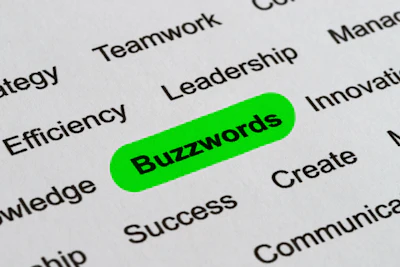
Using Buzzwords Isn’t Always a Buzz Kill
None of this is to say these tools — or the ideas behind them — don’t have value. Many deliver real benefits, and I certainly don't mind seeing them in a press release. But the more specific the language, the more those benefits stand out.
Because at the end of the day, contractors aren’t buying buzzwords. They’re investing in solutions that solve problems and keep work moving forward – things that work.