
One of the most common conversations I have with contractors starts with a misconception. They hear about construction robotics, autonomous equipment or large-scale 3D concrete printing and immediately ask, “How much does the robot cost?”
What many are surprised to learn is that ownership is no longer the only path to adopting advanced construction technology. In fact, one of the most important developments in construction automation over the past several years has little to do with the robots themselves, it has to do with how contractors access them.
For years, adopting construction robotics often required a significant capital investment, specialized expertise and a willingness to assume technology risk. Contractors interested in automation were frequently faced with an all-or-nothing decision: purchase the equipment, build internal capabilities and hope utilization justified the investment. For many firms, particularly small and mid-sized contractors, that was enough to keep robotics on the sidelines.
Today, that equation is changing. Increasingly, construction companies are gaining access to advanced automation through Robotics-as-a-Service, or RaaS. Similar to how contractors rent cranes, lifts or specialized equipment for specific projects, RaaS allows firms to deploy robotic systems without purchasing them outright. Instead of focusing on ownership, contractors can focus on what matters most, improving project outcomes.
This shift comes at an important time for the industry. Associated Builders and Contractors estimates that the construction industry will need to attract nearly 349,000 net new workers in 2026 to meet anticipated demand. At the same time, workforce surveys continue to show that contractors across the country are struggling to fill open positions and maintain adequate staffing levels on projects. As labor availability remains constrained and project demands continue to increase, many firms are looking for practical ways to improve productivity without simply adding more workers. Automation is increasingly part of that conversation.
The challenge is that many contractors remain interested in the benefits of robotics but are hesitant to take on the financial and operational burden of owning a new technology platform, which is understandable.
Construction companies operate on tight margins, complex schedules and significant project responsibilities. Adopting any new technology requires confidence that it will create value, integrate into existing workflows and contribute to project success, and historically, robotics often required firms to make substantial investments before they could answer those questions. RaaS fundamentally changes that dynamic.
Rather than purchasing a robotic system and building an internal program around it, contractors can access the technology, expertise, training and implementation support needed for a specific project or scope of work, which significantly lowers the barrier to entry and allows firms to evaluate automation in real-world conditions before making longer-term commitments.
At RIC Robotics, we’ve seen firsthand how this shift is changing conversations with prospective customers. Contractors who were previously interested in robotics but unwilling to purchase expensive equipment are increasingly open to exploring automation when access is flexible and tied directly to a lease model and project needs. In many cases, the challenge was never skepticism about the technology itself, it was uncertainty around the investment required to adopt it.
Another common misconception is that RaaS simply means renting a robot, but in reality, successful automation deployments typically require much more than hardware alone. The most effective RaaS models combine robotic systems with implementation planning, operator training, technical support, material expertise and ongoing project guidance. The goal is not simply to place a machine on a jobsite. The goal is to help contractors successfully integrate automation into active projects and achieve measurable results. This distinction matters because construction technology succeeds or fails based on execution.
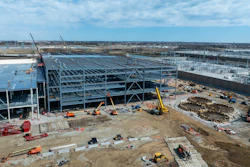
Over the past several years, our team has supported projects ranging from residential housing developments to large-scale commercial construction, including Walmart Supercenter expansion projects utilizing robotic 3D concrete printing technology. One lesson has remained consistent across every project, technology adoption is rarely about the machine itself, it is about providing contractors with the support and expertise necessary to deploy that technology successfully. The same principle applies across the broader construction industry.
As robotics continues evolving, contractors will increasingly evaluate automation the same way they evaluate any other project resource, based on performance, productivity and return on investment. The question will become less about who owns the technology and more about who can effectively access and utilize it.
That shift mirrors trends seen across countless industries. Businesses today routinely access software, equipment and specialized services through flexible models designed to reduce upfront costs and improve scalability. Construction is beginning to embrace a similar approach with automation.
Just as importantly, broader adoption will require workforce development alongside technology deployment. At RIC Robotics, we’ve worked closely with organizations such as the OPCMIA Cement Masons and Plasterers Union to support training initiatives focused on additive construction methods and emerging technologies. What we’ve consistently found is that skilled tradespeople are eager to learn how automation can complement their expertise and help them work more efficiently. The future of robotics in construction is not about replacing workers, but equipping skilled professionals with better tools.
For contractors navigating labor shortages, rising costs and increasing project demands, Robotics-as-a-Service offers a practical and accessible way to begin that journey. It allows firms to explore automation without assuming the costs and risks traditionally associated with technology ownership while maintaining a focus on what ultimately matters most, delivering projects safely, efficiently and profitably.
The future of construction automation will not be defined by who owns the robot, it will be defined by who can access the technology, deploy it effectively and use it to build better projects.