
Ask any concrete contractor about their fuel strategy, and it will be clear that no two jobsites operate under the same parameters. Whether managing indoor slab pours or commercial flatwork, fleet managers must evaluate project timelines, operating expenses, and equipment performance. For compact equipment like power trowels, screeds, saws, rollers and more, selecting the right fuel source comes down to matching the fuel type to the specific demands of the pour.
While gasoline has long served as the primary power source on construction sites, advancements in propane technology have expanded options for fleet managers. Historical performance trade-offs, such as lost horsepower, have been resolved by modern engineering. As a result, evaluating fuel options is less about selecting a single universal solution and more about aligning the fuel type with the specific requirements of the job.
The Role of Gasoline
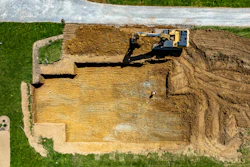
Gasoline remains a primary fuel source for jobsite power due to its universal availability and straightforward field logistics. For outdoor commercial pours, foundation jobs and exterior flatwork, gasoline engines deliver dependable, heavy-duty performance without requiring specialized fuel delivery contracts. Crews can refuel on-site using standard containers to maintain operation.
However, liquid combustion leaves carbon, varnish, and nitrous deposits on carburetors, valves and cylinder walls over time. This requires standard maintenance routines to keep engines running cleanly. Unused gasoline also has a finite shelf life, so equipment left sitting between seasonal projects requires proper fuel treatment to avoid gummed-up lines and a potential impact on performance.
 To streamline this transition, Vanguard partnered with Propane Power Systems to offer EPA- and CARB-certified conversion kits designed specifically for select Vanguard commercial engines. These comprehensive kits include all necessary mounting hardware and maintain joint warranty support, giving contractors a conversion process that minimizes jobsite downtime.Briggs & Stratton
Where Propane Solves Jobsite Challenges
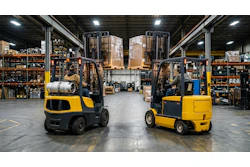
Propane continues to serve a critical role when jobsite conditions or emissions regulations restrict liquid fuels. Running gasoline engines in enclosed spaces is restricted by safety codes due to exhaust emissions. Propane engines equipped with catalytic mufflers significantly reduce emissions, allowing crews to safely power equipment for indoor slabs, basements and commercial retrofits.
Because propane enters the engine as a vapor, it burns remarkably clean, reducing internal carbon deposits by up to 80 percent. This keeps engine oil cleaner and spark plugs free of fouling, which can trim routine maintenance expenses by roughly 20 percent.
Unlike gasoline, propane does not spoil or form varnish over time, so tanks can sit for extended periods while the fuel remains completely stable. Modern vapor delivery systems and precise jetting, such as those engineered into OEM-approved propane conversion kits. The kits built with Propane Power Systems ensure that propane engines deliver the same horsepower and load capacity as gasoline models.
Managing Fuel Costs & Price Volatility
Fluctuating pump prices present an ongoing financial consideration for fleet managers. Historically, propane costs have trended lower per gallon than gasoline. This price stability and lower average unit cost give propane a distinct financial advantage in long-term operational budgeting.
Converting a gasoline engine using an OEM-approved kit yields the highest financial return when completed early in the equipment’s lifecycle.
When adding propane capabilities to existing equipment, conversion timing directly impacts return on investment. Converting a gasoline engine using an OEM-approved kit yields the highest financial return when completed early in the equipment’s lifecycle. This preserves clean internal components and maximizes financial payback, whereas converting an older, high-hour gas engine often requires internal cleaning and rebuilding to remove existing carbon buildup prior to conversion.
Building a Versatile Equipment Fleet
The manufacturers understand that no two jobsites are identical for contractors approach the needs of the industry with a power-agnostic mindset by offering gasoline, propane and battery solutions.
Rather than relying exclusively on one fuel type, versatile fleets leverage multiple options. Deploying gasoline units for open-air pours while utilizing propane for indoor or emission-sensitive work provides contractors with the flexibility to bid on a broader range of projects, safeguard their equipment investment and maintain high jobsite productivity.