

Women in Construction Week in March offers an opportunity to pause and reflect on the people shaping the industry. But the real story isn’t told through panels or policy discussions. Instead, it’s all happening on jobsites, in trailers and during meetings and in boardrooms where decisions are made every day.
This year, instead of focusing on statistics, I asked four women working across the construction industry to share what they are experiencing right now — in leadership roles, in the field and in an industry evolving with new technology. Their answers were candid and thoughtful, offering both perspective and optimism.
Opportunity Has Expanded — Even If the Pressure Hasn’t Disappeared
Opportunity was the first word that surfaced.
“When I look back over my career, the most noticeable change has been opportunity,” one project leader shared. “Earlier on, it often felt like women had to fight just to be considered for leadership roles. Today, the industry is open to women leading teams and having a seat at the decision-making table.”
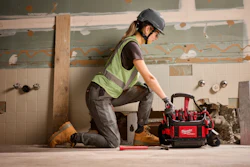
On another active project, a field-facing professional described a team that includes two women PMs, a woman superintendent, and multiple women project engineers from diverse backgrounds. Visibility like that would have been rare not long ago. Yet progress has not erased every barrier — it has refined them.
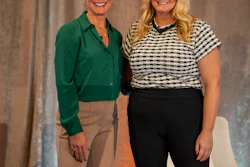
“When I look back over my career, the most noticeable change has been opportunity. Earlier on, it often felt like women had to fight just to be considered for leadership roles,” said Victoria C. Sorrentino, PE, Director of Business Development, Kiewit. “Today, the industry is open to women leading teams, running projects, and having a seat at the decision-making table. Some challenges haven’t disappeared — they’ve just become quieter. Women may still feel they have to work harder to establish credibility, and the mental load of constantly proving yourself can be exhausting. For the next generation, confidence, resilience, and self-advocacy remain essential. Progress is real, but awareness and preparation are still powerful tools.”
“Some challenges haven’t disappeared — they’ve just become quieter,” another industry leader explained. “There can be subtle assumptions about capability, communication style, or how authority is expressed.”
A program manager reflected on the less visible weight many women carry:
“The invisible barrier is sometimes simply not having the right space to be heard and seen for your potential and unique worth.”
The doors are more open. But credibility, resilience, and self-advocacy are still essential.
The Impact Is Showing Up in How Teams Function
When asked where women are driving the biggest impact, none of the responses focused only on titles They focused on culture.
“I’ve seen women improve coordination between crews, strengthen safety conversations, and help diffuse high-pressure situations through clear, steady leadership,” one operations professional shared.
Another leader spoke about emotional intelligence as a quiet force multiplier:
“Women have an uncanny ability to connect and understand the people around them — to read the room, to coordinate, to unify teams and make customers feel valued.”
Sometimes the impact is structural. A preconstruction professional noted that representation has led to practical changes on jobsites — from women-specific PPE sizing to appropriate facilities.
“These may seem like small details,” she explained. “But they make a real difference in comfort, safety, and belonging.”
Presence changes systems. Not loudly — but meaningfully.
Inclusion Isn’t a Policy. It’s a Moment.
Perhaps the most powerful reflections were about inclusion. Interestingly, the professionals we spoke with didn’t dwell on exclusion stories. They spoke about the moments that changed their trajectory.
“I try not to dwell on the times I didn’t feel included,” one project professional said. “What mattered were the moments when someone chose to invest in my growth.”
She described mentors who created safe spaces to ask questions without judgment. - “That kind of support builds more than knowledge — it builds confidence.”
Another shared a smaller, but deeply personal example. - “The team chose a day I was onsite to include me in their monthly birthday celebration. That made me feel genuinely included.”
Inclusion, it turns out, is rarely about a formal initiative. It is about intention. And in more than one case, it was other female leaders who first said, “You belong in these rooms.”
Changing the Narrative for the Next Generation
When asked what still needs to change, one theme surfaced repeatedly: visibility.
“I don’t think women see themselves in construction early enough,” a senior leader reflected. “At 16 years old, no one ever asked me what a career in construction could look like.” She added: “If that 16-year-old version of me could have seen the woman I am now, how that may have sparked the flame much earlier.”
Others pointed to culture — not policy — as the true lever.
“If I could change one thing, it would be fewer labels,” one industry professional said. “At the end of the day, most of us simply want to be seen as professionals.”
Progress, they emphasized, is less about special initiatives and more about making inclusion feel standard — built into everyday jobsite life rather than treated as an extra.
Technology, AI, and the Future Being Built
As AI and digital tools reshape construction, the perspectives were thoughtful and balanced.
“I see enormous potential,” one construction leader said candidly. “Technology can level the playing field. It can make knowledge more accessible and workflows more efficient.”
For many, AI means faster access to information, stronger data-backed confidence, and new pathways into planning, estimating, and leadership roles. But the risk lies in misuse.
“Leadership in construction has become more visible and intentional, with more opportunities for mentorship, advocacy, and representation. I’ve seen real effort to create space for women’s voices and leadership, said Dawn Lowers-Davis, President, Lowers Welding & Fabrication Inc. “The biggest opportunity with technology and AI is improving access to information and decision-making for everyone. If used thoughtfully, these tools can help create a more informed and efficient workplace. Construction is becoming a place where women can build long-term leadership careers, but visibility, relationships, and access to networks still matter. Progress is happening — but we still have work to do.”
“Overreliance without critical thinking can be just as dangerous as resistance to change,” another professional noted.
The consensus was clear: AI will reshape how we work — but it will not replace judgment, experience, or leadership. And women must help shape that future.
Is Construction Ready for Long-Term Leadership Careers?
The most honest answer: yes — and not entirely yet. There are more visible paths than ever before. There is real movement. There are leaders actively creating space. But influence, sponsorship, and internal networks still matter deeply.
“Success is not only about performance,” one project executive observed. “It’s also about visibility and relationships.”
In a male-dominated industry, that dynamic can create structural limits — especially for women of color. And yet, none of these professionals framed obstacles as ceilings.
“Don’t wait for opportunity,” one leader said plainly. “Go after it. Be exceptional.” Another offered perhaps the simplest and strongest conclusion: “There is room for everyone.”
This may be the clearest sign of progress. Not that women are asking for space. But they are building it.