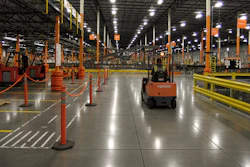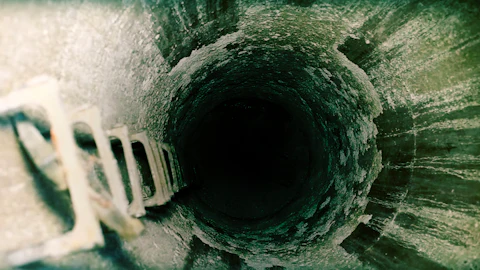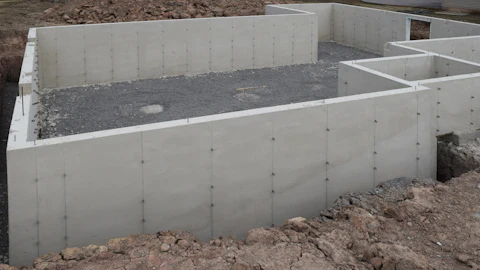

To celebrate Halloween and the spooky season, we're exploring the psychology and architecture of horror and what concrete's role might be in environments that may come across as a bit creepy. We connected with Frank McAndrew, PhD, a psychology professor at Knox College, to dig into his research on this very topic.
Watch FCP is a video-first content and sponsorship program designed to connect advertisers with highly engaged construction professionals across YouTube, social media, email, and more.
Subscribe to our newsletters to have the latest insights delivered to your inbox.
Jonathan Kozlowski, Editor-in-Chief, Concrete Contractor:
Hi, I'm Jon. Welcome to Watch FCP, providing insights, interviews, and more for the construction industry. To celebrate Halloween, we're exploring the psychology and architecture of horror and what concrete's role might be in environments that may come across as a bit creepy. Frank McAndrew, PhD, a psychology professor at Knox College, researched this very topic. He explains that places that inspire feelings of creepiness and horror possess combinations of features that we have evolved to regard with caution. These include limited sensory information, a lack of a freedom of movement, and a lack of control.
First we have to understand what being creeped out means.
Frank McAndrew, PhD, psychology professor at Knox College:
If you're talking about physical spaces, we're kind of programmed through evolution to like some kinds of spaces a lot more than we like others. And there's two concepts that are important here. It's called prospect and refuge.
Kozlowski:
To explain, prospect relates to visibility and how many hiding places are available for things to sneak up. Refuge is a sense of being protected or hidden.
McAndrew:
Spaces around us can creep us out and create a sense of horror because they put us in this position where we feel vulnerable, isolated, the concrete may give you the idea that it's harder to get out of here. On the other hand, if the threat that you're worried about is potentially outside, the concrete may be reassuring and protecting you from whatever that is that you're worried about. So I think it could cut either way. So it's not really the concrete per se. That's just the material that's being used to construct the more psychological aspects of the space that you're in.
Kozlowski:
The environment communicates what the space is supposed to be used for. If we want our concrete space to be inviting, MacAndrew says to consider the finish and quality. A space with smooth, finished concrete walls that communicate, "this area is where people are going to be spending time."
Okay, so it's less material and more on the state of the space and the people therein.
For more happenings within the construction industry, follow Watch FCP and check us out at ForConstructionPros.com. Still, I can't help but get that feeling of the walls closing in.