*This article is sponsored by MILESEEY TOOLS
Laser distance meters have been made to make measuring faster and more accurate than traditional tape measures. Although they have significantly improved, outdoor measurement has long been one of the most challenging aspects of construction projects. Professionals working on large job sites still encounter obstacles that can slow the progress and introduce uncertainty in completing their task.
For instance, needing to measure a roofline 200 ft away. In bright daylight, the laser point is nearly impossible to see, making it difficult to confirm the accuracy of what you are measuring. So to confirm, you end up going closer to see if you're aiming the correct location, trying to verify the target, go back to the original position and measure again, then repeat the whole process. This just doesn't take much of your time, but the more you go back and forth, the result of what you measure is less accurate.
Situations like this are familiar to professionals like contractors, estimators, remodelers, and inspectors. As construction becomes increasingly digital, laser measurement tools are evolving alongside it. Today's devices are beginning to address not only how measurements are captured, but also how they're verified, documented, and integrated into the broader workflow. Modern laser measuring devices are now designed to improve target verification, simplify documentation, and connect measurement data with digital project records. By combining precision with better visibility, recordkeeping, and workflow integration, these tools are helping construction teams complete tasks more efficiently while reducing costly errors and unnecessary rework.
The Right Target Is as Important as Getting the Right Measurement
When working outdoors, getting an accurate measurement usually isn't the hardest part; it's making sure the accuracy of where your target is. Under bright sunlight, the laser dot can be hard to distinguish over long distances. On larger jobsites, that uncertainty often means walking back and forth to double-check, retaking measurements, or stopping work to verify the results. Those extra minutes may seem minor, but they add up quickly over time. More importantly, measuring the wrong point can create problems that aren't discovered until much later.
That's why most professionals are paying closer attention to how measurement tools help identify a target, not just how accurate the measurement itself is. Features that improve visibility and make it easier to confirm the exact point before taking a reading can not only save time but also reduce costly mistakes.
 MILESEEY TOOLS
From Field Measurements to Project Decisions
A single measurement usually becomes part of a much larger process. It doesn't stand on its own.
Measurements often become part of estimates, inspection reports, renovation plans, facility records, or project documentation. If that data isn't documented properly or is difficult to retrieve later, teams can end up spending valuable time searching for notes or revisiting the site to measure again.
This is why measurement tools are evolving beyond their original purpose. Instead of acting as devices that simply display a distance, many now help organize information as it's collected. As construction workflows become increasingly connected, the value of a measurement lies not only in its accuracy but also in how easily that information can be used after it's captured.
Choosing the Right Tool for the Way You Work
Every construction professional approaches measurements a little differently. Professionals measuring rooms for flooring or cabinetry may want a reliable device that prioritizes speed and simplicity. Meanwhile, others may prefer documenting existing structures, which often benefit from tools that can store measurements, organize project data, and make reporting easier.
Recognizing these differences, manufacturers are moving away from the idea that one laser distance meter should suit every application. Instead, newer product lines are designed around specific job-site needs and workflows.
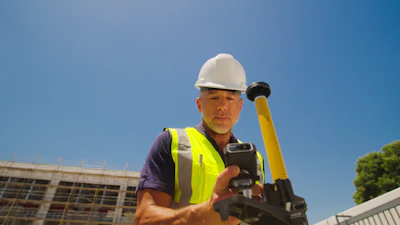
MILESEEY's Green Revolution Series reflects this broader trend of designing workflow-specific measurement tools. Rather than positioning each device as a one-size-fits-all solution, the lineup recognizes how different measurement tasks can call for different functions. The S50 is designed for general long-range outdoor measurement across a variety of construction, renovation, and even DIY applications. Building on the S50 approach is the S50C, which incorporates camera-assisted target verification for measuring distant or visually challenging points on outdoor projects. The S50R magicplan Edition, however, focuses on integrating measurement data into a connected documentation workflow, making it suitable for professionals whose work involves creating digital floor plans or documenting existing projects.
 MILESEEY TOOLS
How Construction Technology is Evolving
Construction technology has come a long way from simply helping professionals work faster. The evolution of laser distance meters also reflects a broader change. The focus is increasingly on making every step of the job more efficient, connected, and easier to manage.
As these workflows continue to evolve, the conversation is shifting from "How far can this tool measure?" to "How well does this tool support the entire measurement process?" For many construction professionals, that may ultimately prove to be the more meaningful question. The goal isn't just to capture accurate data, it's to make that data easier to organize, access, and use throughout the life of a project. A good measuring tool isn't just about accuracy. It helps save time, reduce errors, and make every project run more smoothly.