From Stakes to Satellites: The Evolution of Machine Control
Explore the evolution of machine control and its transformation from a basic GPS-guided grading tool with limited capabilities and frequent challenges into a jobsite-wide intelligence platform.
When I first used machine control at a development site for an industrial power plant about 25 years ago, it was simple — almost primitive — by modern standards.
We had a base station, a rover, and a motor grader. That’s it.
While machine control technology on heavy equipment had been around since the 1960s, the earliest incarnations felt more like a novelty or a new tool than a revolution in the making. It wouldn’t take long for that perspective to change.
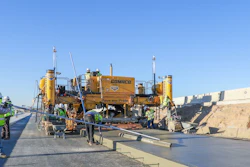
At its core, the technology, which didn’t show up on the jobsite in any meaningful way until about the 1990s, enables machine operators to control a grader’s blade position by accurately positioning earthwork machinery using 3D design models and GPS systems.
Today, the technology isn’t just a part of the workflow; it drives the modern jobsite. Machine control is no longer a nice-to-have; it’s a force multiplier across the entire jobsite and in the back office.
Its evolution as an indispensable tool, however, is still in progress.
The early iteration of the technology was functional but far from user-friendly or intuitive. At the time, the motor grader’s controls weren’t intuitive, and users needed repeated training just to be a novice at using it.
The early days of machine control proved its potential. The path forward is about giving machines and operators a more holistic view of the entire jobsite, not just what’s happening under the blade.
Yes, There Were Glitches
As a much younger professional, I didn’t ponder how machine control might evolve, but I was curious enough to learn more. Although my role at the industrial power plant didn’t involve managing data, I stepped out of the cab whenever possible to observe how the rover operated and to try my hand at layout work.
I had to balance curiosity against reality. Using a base and rover required wearing a backpack and being constantly tethered, which wasn’t ideal, especially when the cab was air-conditioned.
Machine control didn’t start as a perfectly polished solution. Model building was new, and the functionality for spotting glitches wasn’t fully developed or as sophisticated as it is today.
If there was an anomaly, such as a point 99 feet down on the model that no one caught, the grader’s blade would suddenly dive into the ground, stopping the motor grader in the process. Operators learned to work around the glitches and would temporarily turn off machine control, move past the problem area, then re-activate it.
Despite these challenges, operators quickly learned that the technology had clear potential, and the early glitches were soon fixed.
Some of the earliest improvements focused on operator comfort, such as making it easier to create line offsets. Previously, creating such changes needed by the operator was cumbersome, but these changes made adjustments more intuitive.
Another major advancement was relocating the antennas from always being mounted over the blade to being installed on the cab. This was especially significant for dozers and motor graders, where blade movement and cab rotation could interfere with their operation.
Early installations often resembled Frankenstein experiments, with a mess of wiring and cabling running into various boxes, making for a cumbersome setup. Additionally, system designs had to stay relatively simple to function reliably.
Initial Use CasesLeica Geosystems
When I first encountered machine control, most contractors used it to finish grading. Nearly every task on the jobsite was performed the traditional way, either with a dozer or an excavator.
Most users wanted to run motor graders more efficiently. They weren’t considering how excavators, scrapers, dozers, or compactors might be integrated in the future. At that time, it was solely about grading a surface.
If the initial use cases were narrow, that would quickly change, especially as the technology became more cost-effective. As machine control technology improved, it expanded beyond a single machine.
Contractors soon added it to more machinery, and the efficiency gains from each additional machine accelerated projects, helping teams to accomplish more without dramatically expanding their teams. The evolution of machine control technology has made it accessible to a broader range of people on the project, further amplifying its benefits.
What might have been a 30% improvement on one machine became much more significant when measured across the entire jobsite. In retrospect, it’s clear that was a turning point.
As machines became capable of handling more complex data files, cost-effective solutions enabled them to operate simultaneously. In doing so, machine control moved from a tool to help complete a single task to a system for coordinating (and safely completing on time and on budget) activities across the entire jobsite.
Moving Beyond Machines to the Whole Jobsite
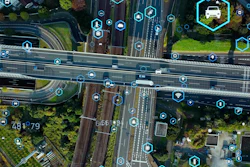
Machine control has evolved from a tool for hitting grade to a system for improving productivity. Now, it’s moving toward something much more significant: enabling full jobsite awareness and better decision-making.
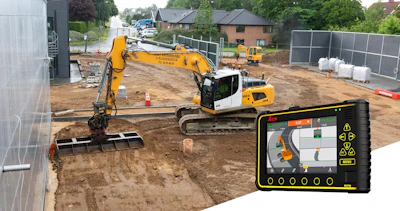
Despite the progress, today’s machine control largely still monitors what the machine is doing, focusing on what is directly beneath it. While beneficial, it doesn’t tell the jobsite’s full story or account for what might be immediately to the side, in front, or behind.Leica Geosystems
Take a machine control-equipped motor grader, for example. When grading with the automatics engaged, the system logs the current surface. It doesn’t know what’s happening just beyond the blade, including whether there’s a hazard, another machine in the path, or a better way to move material. That’s ripe for the next phase of machine control’s evolution.
Expanding operator awareness of their broader surroundings will be one of the next major evolutions in machine control. The future isn’t solely about precision; it’s about awareness and ensuring safety.
Machines will have greater overall job-site awareness, including surface safety and the protection of people and assets. All of which gives team members the data they need to make real-time decisions with confidence.
More data and more insight into what’s happening around them enable operators to make better decisions.
Jobsite intelligence isn’t limited to the field.
The team in the office also needs real-time, accurate data to operate, allowing all functions — whether it’s payroll or accounts payable — to easily extract the information they need from field operations. No matter how efficient field teams are, jobs will struggle if office functions lag.
Jobsites are built on data, and the opportunity lies in connecting data across the entire organization. Better-equipped users make more informed decisions and drive efficiency.
That’s when machine control technology maximizes its potential, not just for individual machines or operators, but across the entire jobsite, helping everyone to work smarter, safer, and more efficiently.
Companies that embrace and smartly deploy technology will gain a competitive edge because the next advantage isn’t just the tools or the machines. It will come from how companies harness the data available to them and use it to make decisions across their entire operations.
Latest in Machine Grade Control, GPS, Laser & Other

 Leica Geosystems
 Leica Geosystems
 Leica Geosystems